

In the heart of Los Angeles stands a building that embodies an entire era of the city’s evolution: the Hotel Alexandria. Erected at the dawn of the 20th century as one of the city’s most opulent destinations, it has traveled a complex path from a symbol of high society to a period of decline and, ultimately, a triumphant rebirth. This structure is more than just an architectural landmark; it is a vital cultural and social space that reflects the ever-changing urban landscape. Read more at losangeles1.one.
The Building
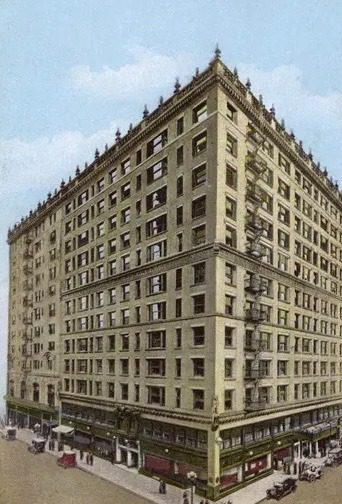
The Alexandria Hotel was built in 1906 for approximately $2 million—a staggering sum equivalent to tens of millions of dollars today. The project was financed by the Bilicke-Rowan Fireproof Building Company, an entity created specifically for large-scale commercial real estate investments in Los Angeles.
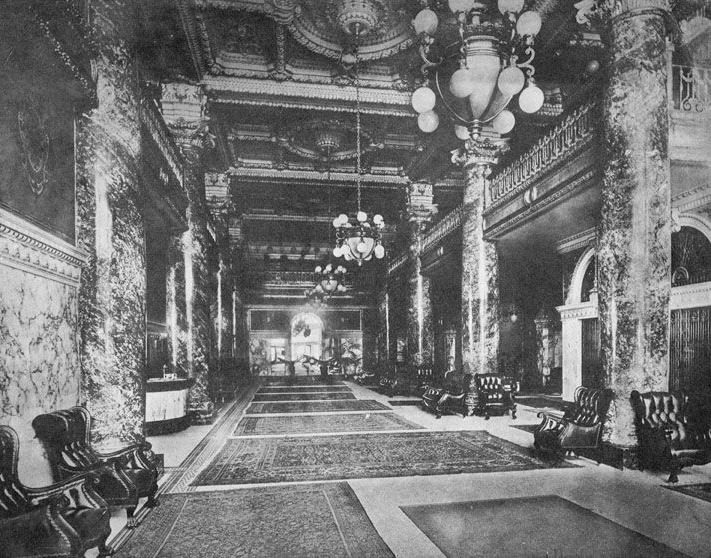
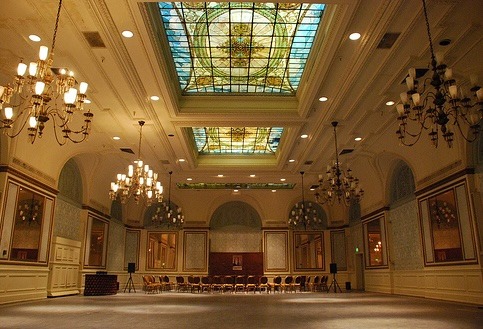
Designed by architect John Parkinson, the building was crafted in the Beaux-Arts style, featuring a signature blend of brick, terracotta, and decorative sculpture. The facade was adorned with massive griffins, while the main entrance led guests into a lavish marble lobby complete with two-story columns and a gold-leaf ceiling. One of its most iconic spaces was the Palm Court, a 199-foot hall topped with a stained-glass ceiling, which later earned the status of a Los Angeles Historic-Cultural Monument. As a luxury hotel, it featured over 360 rooms with private bathrooms—a true innovation at the time—and was designed to attract wealthy guests and businessmen for long stays. The hotel was a cornerstone of the “downtown investment boom” model, generating revenue through room rates, banquet hall rentals, commercial leasing on the ground floor, and the hosting of major events.
The Hollywood Connection
During the first decades of the 20th century, the Alexandria was the crown jewel of the city’s hotel scene. Until the opening of the Biltmore in 1923, it remained the epicenter of elite social life in Los Angeles. It played host to the era’s most influential figures, including U.S. Presidents Theodore Roosevelt and Woodrow Wilson, British King Edward VIII, opera star Enrico Caruso, and Hollywood legends like Charlie Chaplin and Mary Pickford.
The hotel was a birthplace for the burgeoning film industry. It was on its “Million Dollar Carpet” that the first major studio contracts were signed, laying the foundation for the Hollywood studio system. High-stakes negotiations for the creation of United Artists took place within its walls, and early films were shot on location there as early as the 1910s.
However, the hotel’s history is inextricably linked to the personal tragedies of its founders. In 1915, Albert Bilicke died in the sinking of the RMS Lusitania, followed shortly by the death of his partner, Robert Arnold Rowan. After the loss of these key investors, their heirs sold the property to a major investment group connected with the Ambassador Hotels System. It was a classic deal for the time: selling an asset via corporate restructuring to scale profits. Yet, competition from newcomers like the Biltmore Hotel gradually eroded its standing. By the late 1920s, the Alexandria had changed hands several times, and in 1932, its operating company declared bankruptcy. The Great Depression, a collapsing tourism market, and stiff competition left the hotel with over a million dollars in bond debt. The business model of the classic luxury hotel had essentially collapsed, turning a once-thriving operation into an asset sold off in pieces.
The Decline
In the 1930s, the hotel lost much of its original interior, as valuable decor elements were sold off to cover mounting debts. Following a renovation and reopening, the building struggled to regain its former glory. Throughout its existence, the Alexandria played a vital social role. During World War II, its spaces served as temporary lodging for American soldiers. The Palm Court changed its purpose several times, shifting from an elegant ballroom to a boxing arena where athletes trained before big fights. Over the years, it also hosted political speeches and major social events.
As LA’s business center shifted westward, the area surrounding the hotel began to decline. By the 1970s, the building had become housing for low-income residents. Its proximity to Skid Row contributed to rising social issues, including crime and safety concerns. Nevertheless, one of the hotel’s most celebrated areas, the Palm Court ballroom, remained in relatively good condition, earning Historic-Cultural Monument status in 1971.
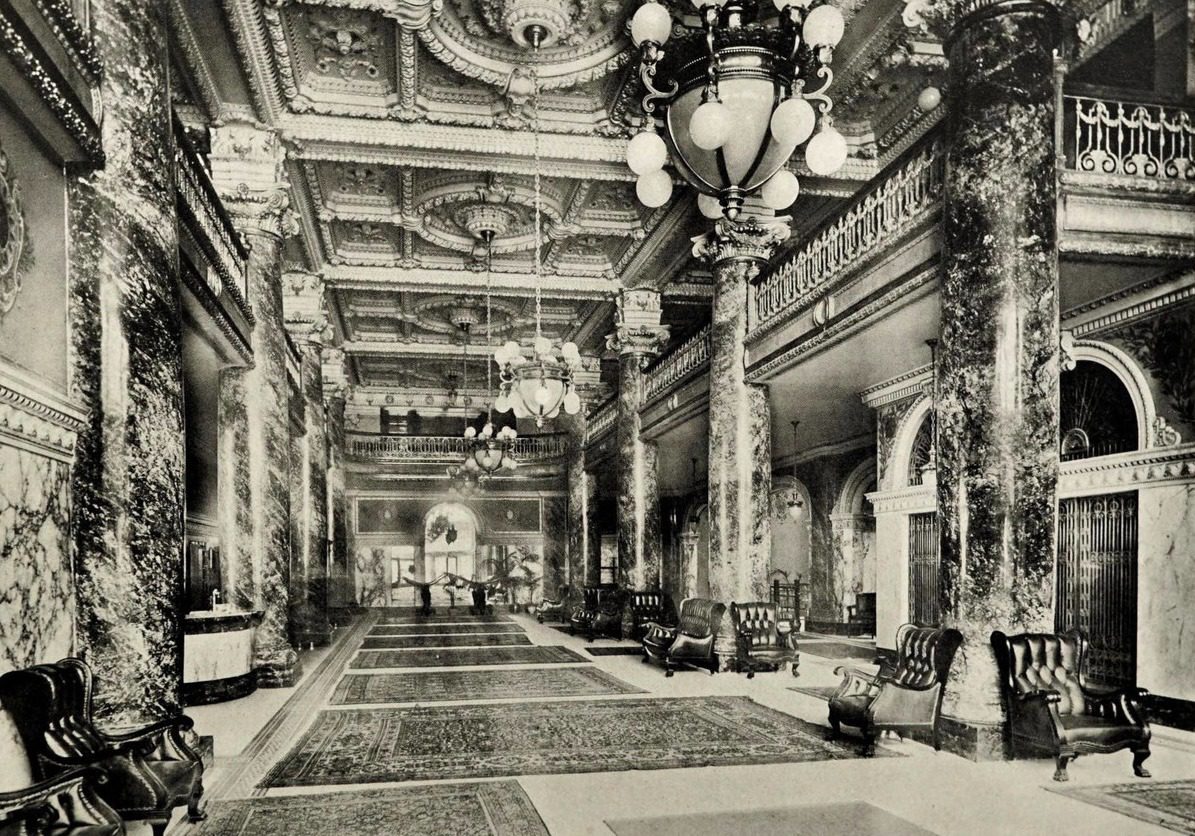
A massive renovation took place between the 1960s and 1970s. A mezzanine was added to the main lobby, central proportions were altered, and original decor was either lost or covered by new construction as interiors were adapted for commercial use. This era is often viewed as the most controversial in terms of preserving historical authenticity. It was during the post-1970s period that stories of the “Lady in Black”—a ghost seen wandering the halls—began to circulate. She is often described as a figure wearing a barbed-wire crown with traces of “bloody tears.” Tales of elevators moving on their own also emerged. While these stories lack official confirmation, they have become part of the hotel’s cultural persona, branding it as one of the most “mystical” buildings in Los Angeles.
Even during its decline, the Hotel Alexandria remained a prized location for the film industry. Its marble staircases, ornate halls, and “majestic past” vibe attracted directors and producers alike. The building has been featured in numerous films, including David Fincher’s “Se7en,” “Dreamgirls,” “Spider-Man 3,” and “Water for Elephants,” cementing its place in the Hollywood cultural code.
Rebirth
At the turn of the 21st century, Downtown Los Angeles underwent a massive revitalization. In 2005, the hotel was converted into a residential complex, blending commercial and affordable housing.
Since then, the Hotel Alexandria has functioned as a modern living space that preserves its historic interiors and architectural details. Its ballrooms are actively used for events, weddings, and film shoots.
A curious chapter in its history is the so-called “Phantom Wing”—an additional wing built by businessman William Chick. Due to a conflict between owners in 1938, the passageways between the wings were bricked up, leaving those rooms inaccessible for decades. These areas remained largely untouched, becoming a literal “time capsule.” Only in the 21st century was the building sold for further renovation.
The story of the Hotel Alexandria is a reflection of Los Angeles’ own evolution. Blending historical legacy with modern use, it remains a vital component of the city’s cultural and architectural landscape.