

It is the largest public school system in California and the second largest in the US. Only New York City has more students. During 2022-2023, it served 565,479 students, including 11,795 early childhood and 27,740 adults. During the same academic year, it had 24,769 teachers and 49,230 support staff. It is the second biggest employer after the local government. Its budget amounted to more than $10 billion in different years. Learn about the features of obtaining a higher education in Los Angeles. Read more on losangeles1.one.
The history of the creation
It was preceded by two branches. The one for schools was organized in 1870 and another one for high schools was created in 1890. Initially, it was developed to serve elementary and junior school students. Later, it began to work with high school students as well. On July 1, 1961, they merged to form the Los Angeles Unified School District.
The program was changed several times. Once, schools were given more power over everyday decisions. Public school choice was implemented due to school board member Yolie Flores. In the 1990s, the Education Alliance for Restructuring Now and the Metropolitan Annenberg Metropolitan Project were created. This gave principals even more power to make changes to the program. Later, this led to the creation of eleven mini-districts with decentralized management.
Structure
The jurisdiction includes LA and several surrounding cities and towns in southwestern part. It has its own police force, which was created to provide services to the county’s schools in 1948. The district’s cafeterias serve about 500,000 students a day, rivaling the number of visitors at local McDonald’s restaurants.
In the past, it has been criticized for extremely overcrowded schools with large class sizes, high dropout rates, poor academic performance in many schools, poor maintenance and incompetent management. In 2007, the dropout rate was 26% for students in grades 9-12. Later, they created an ambitious program of reconstruction, which was designed to relieve overcrowded schools.
Housing for district employees
Between 2009 and 2019, the county built three housing units: Norwood Learning Village, Selma Community Housing Complex in Hollywood and Sage Park Apartments. Although the units were designated for teachers, among the requirements for settlement in the complex was a certain salary level. Thus, the teachers lost the opportunity to live there. Norwood and Sage Park offered housing to other staff members, who make up about 50 percent of Selma’s residents.

Activities during the COVID-19 pandemic
Following the outbreak of the pandemic in 2020, the schools were closed to stop the spread of the disease. In August 2021, it adopted a mandatory vaccination policy for the staff, suppliers, contractors, volunteers and affiliated charter schools. A similar one was announced for students. Then, it was delayed until 2023. In January 2022, it was announced that students would return to campus, requiring all of them to wear masks and be tested weekly for COVID-19. A month later, the board announced that the county would eliminate the requirement for outdoor masks after LA authorities decreased safety rules.

It has been challenging to buy toilet paper or hand sanitizer. Their prices rose quickly. Many parents helped the teachers of the school district by buying the necessary things for their children with their own funds. The district spent $3.2 million to supply schools with hand sanitizer.
Teachers’ strikes
On May 30, 1989, approximately 20,000 county members went on strike for higher salaries and greater administrative control. The strike lasted nine days. The months leading up to the strike were very controversial. Both sides used numerous negotiating tactics, including teacher demonstrations, threats to withhold grades and many hard-fought court battles. The union’s demands included higher wages and improved school conditions. Thousands of teachers were mobilized before the strike to get ready for it. During the strikes, most of the city’s 600 schools remained open but with reduced student attendance. The district reported that 8,642 teachers crossed picket lines and the public rhetoric on both sides was critical and intense.
After negotiations, a settlement was reached and a three-year contract was signed. Both sides claimed victory. Despite a successful teacher pay raise obtained in the settlement, the massive economic recession of 1990 caused negotiations in 1991. They focus on preventing mass layoffs due to hundreds of millions in budget deficits. Wages were cut to avoid layoffs, dampening the positive results of the 1989 strike.

On January 14, 2019, 30,000 teachers walked out in the first teacher strike in Los Angeles since 1989. The strike lasted six days. Schools remained open and other teachers replaced the strikers. However, according to various estimates, school attendance dropped to less than half during the strike. Teachers and their supporters held rallies across the city, including at City Hall and school district headquarters.
The two sides eventually reached an agreement on January 22, 2019, after an overnight negotiation session. The deal included a 6 percent pay raise for teachers, a reduction in class size by 4 students, the repeal of a provision that previously allowed larger class sizes during economic hardship and a commitment to provide a full-time nurse in every school, as well as a librarian for every middle and high school. The agreement also included the creation of 30 community schools across the district, modeled after similar programs in Cincinnati, Ohio and Austin, Texas. They seek to provide students with social services and an arts-based learning experience.
Construction of public schools
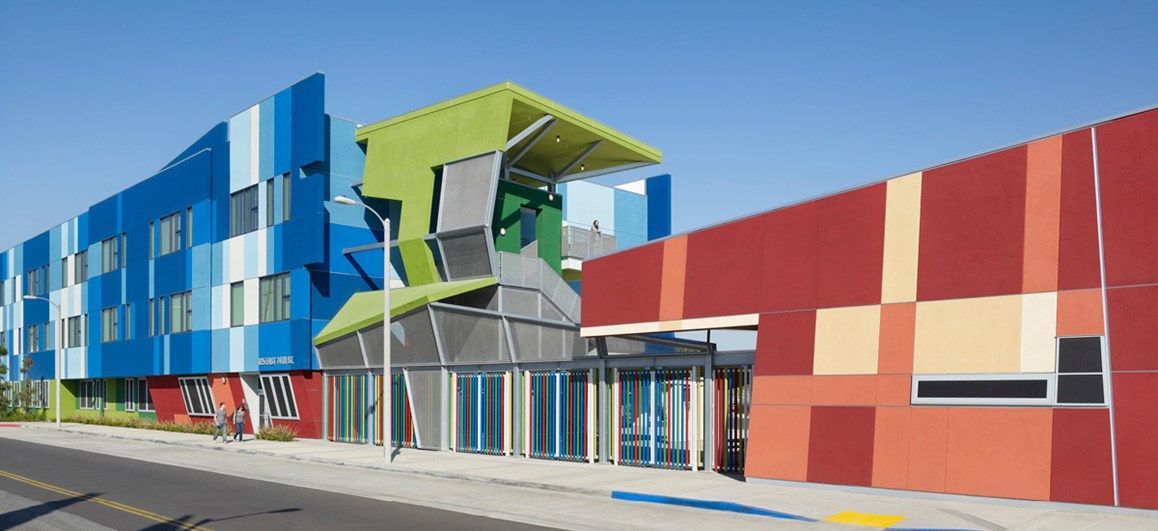
The construction of the project became the most expensive school in the US. It has three elementary schools, three middle schools and four high schools, including LAHSA. The Robert F. Kennedy Community Schools opened in September 2010 at a cost of $578 million to serve 4,200 students. Costs were $350 per square foot in 2010.
As of the 2011–2012 academic year, the distribution of enrollment by ethnic groups was:
- 72.3% of students were Hispanic, of any race
- 10.1% of students were non-Hispanic white
- 9.6% of students were African American, while Asian American students made up 6%, including 2% of students of Filipino descent
- Native Americans and Pacific Islanders together made up less than 1%.
African-American students were six times more likely to be arrested. This contributed to the decision to decriminalize school discipline in 2014. Minor offenses would be referred to school staff rather than prosecuted.