

Kip Thorne is one of the most famous astrophysicists of our time and a 2017 Nobel Prize in Physics laureate for the historic discovery of gravitational waves. His scientific research has not only changed our understanding of the universe but has also influenced the development of new technologies, astronomical discoveries, and even the film industry. Thorne gained widespread recognition through his contribution as a scientific consultant for the film “Interstellar”, which made his name famous beyond the academic community. Find out more about the development of education in Los Angeles after World War II. More on losangeles1.one.
Biography
Kip Scott Thorne was born on June 1, 1940, in Salt Lake City, Utah, USA. His parents were scientists, which fueled Thorne’s interest in science from an early age. His father, David Wynne Thorne, was a professor of soil chemistry at Utah State Agricultural College. Throughout his life, he heavily influenced dryland agriculture not only in the US but also in the Middle East, Pakistan, and India, serving as an intellectual inspiration for his son. His mother, Alison Comish Thorne, aspired to be an academic. However, her career was curtailed by a Utah law that prohibited the wife of a university employee from also working at the university. She dedicated most of her life to community organizing and public activism, as well as raising and mentoring five children. His parents encouraged the siblings to pursue their own interests, value individuality, think independently, and not automatically accept the cultural stigmas of the community they lived in.

In the 1950s, the boy had an active social life. He played saxophone and clarinet in a dance band, participated in dance concerts, edited the school yearbook, and was on the high school debate team. But his deepest passion remained physics. After school, he enrolled at the University of California, Berkeley, where he earned a Bachelor’s degree in Physics. He then completed his Ph.D. at the California Institute of Technology (Caltech) in 1965. In the summer before his senior year of college, he secured a job doing theoretical astrophysics research under the inspiring guidance of astronomer Jesse Greenstein. This resulted in his first published paper on the “Theory of Synchrotron Radiation from Stars with Dipole Magnetic Fields.” From the very beginning of his career, Thorne was captivated by questions related to gravity, black holes, and the theory of relativity. In his scientific work, he actively applied the mathematical framework of Einstein’s General Theory of Relativity to solve problems concerning extreme conditions in the universe.
Black Hole and Cosmology Research
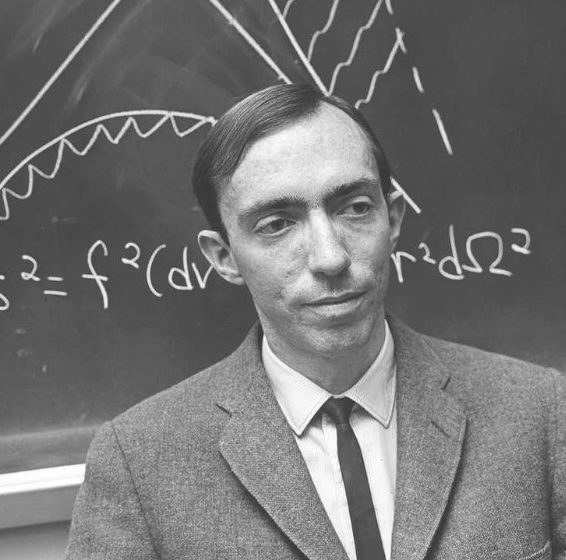
Throughout his first decade at Caltech, gravitational waves were only part of the group’s research portfolio. The focus was on black holes and other astrophysical phenomena where gravity is so strong that it must be described by Einstein’s laws of relativity, not Newton’s laws. Students and post-docs used the General Theory of Relativity to analyze the structures and astrophysical roles of these objects, as well as how they would behave when disturbed. This fed into the core direction of the gravitational wave research: an evolutionary vision of the information that could be extracted from gravitational waves.
Thorne is well-known for his work on black holes and other extreme cosmic objects. He conducted theoretical studies on how black holes might form from collapsing stars, and he also investigated the phenomena occurring near these objects. For example, how material behaves when falling into black holes and how they might affect the surrounding space. Notably, Thorne collaborated with another renowned astrophysicist, Jonathan Sternberg, in researching theoretical models of black hole evolution and their impact on the surrounding cosmos.
During almost half a century of his astrophysics career, his graduate students and post-docs conducted important and effective research. In many cases, they took research problems suggested by Thorne and, with little assistance, made major discoveries. In other cases, they themselves identified important research problems and brought them to fruition. Over 43 years of mentoring students and post-docs, approximately 60% of the time and effort went into research related to gravitational waves. The other 30% of the time was spent on a wide range of other issues in relativistic astrophysics or the theory of relativity.
The Discovery of Gravitational Waves
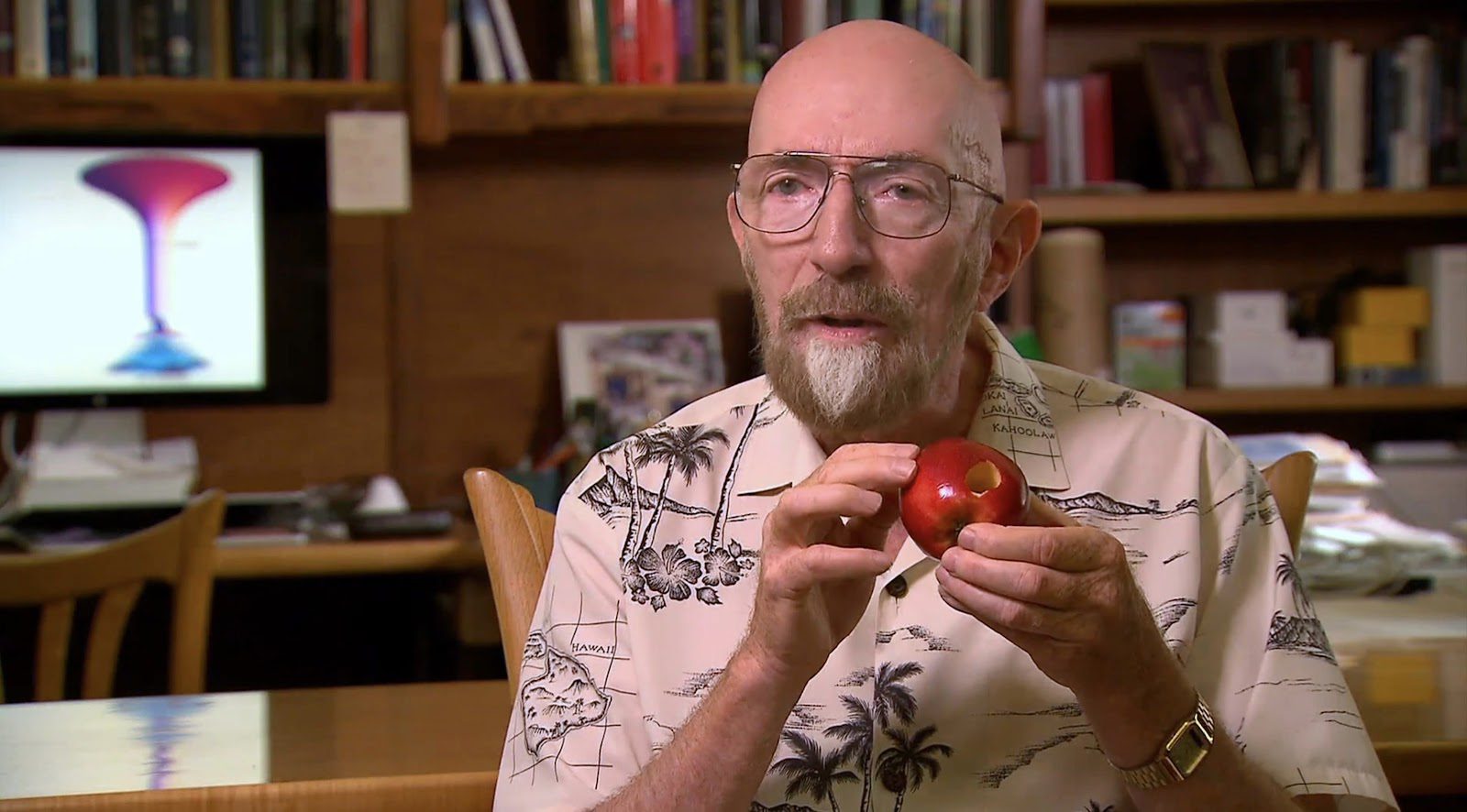
One of Kip Thorne’s greatest achievements was his research on gravitational waves. These waves are ripples in spacetime created when massive objects, such as black holes or neutron stars, move or merge. The existence of gravitational waves was predicted by Albert Einstein in 1915 as part of his General Theory of Relativity, but it wasn’t until over a century later that these waves were directly detected using the LIGO (Laser Interferometer Gravitational-Wave Observatory) detector.
Kip Thorne was one of the principal architects of this discovery. He was a founding member of the scientific collaboration working on LIGO. His theoretical research and numerical simulations played a key role in developing the methods necessary to detect these waves. The discovery of gravitational waves confirmed crucial predictions of the General Theory of Relativity and opened a new era in astrophysics, allowing astronomers to “listen” to the universe through these invisible spacetime oscillations. For this breakthrough, Thorne was awarded the Nobel Prize in Physics in 2017.
The Film “Interstellar”
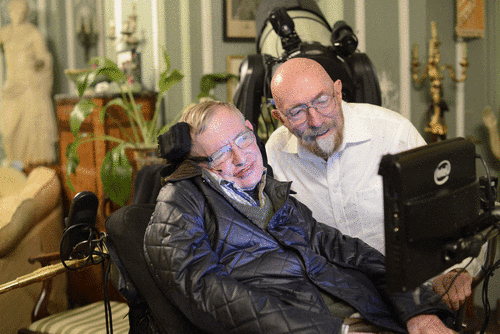
Kip Thorne became not only a great scientist but also the consultant for Christopher Nolan’s film “Interstellar”. The film explores themes of black holes, gravitational waves, and spacetime, and many of these scientific aspects were guided by Thorne. He worked with director Nolan and screenwriter Jonathan Nolan to ensure the film’s scientific elements were as accurate as possible and to help create visually stunning scenes, particularly the depiction of a black hole, which was scientifically based on real calculations.
Thanks to Thorne, the film presented scientifically accurate representations of black holes and other astrophysical phenomena, enabling viewers to better understand these complex concepts.
The Astrophysicist’s Books
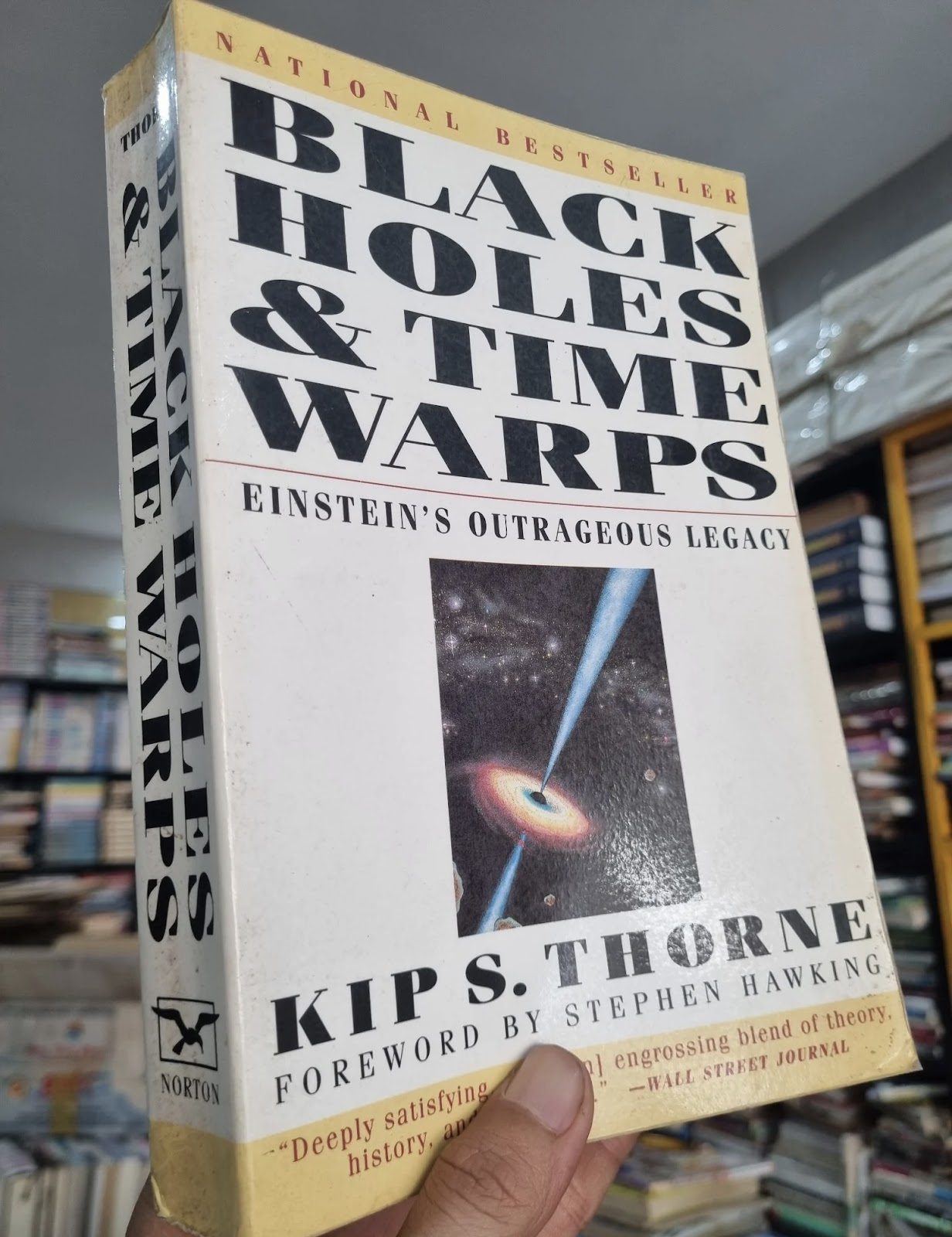
Kip Thorne is the author of numerous scientific papers and books, the most famous of which is “Black Holes and Time Warps: Einstein’s Outrageous Legacy”. The book became a bestseller and popularized the concepts of black holes among a wide audience.
His ability to explain complex scientific concepts in simple terms has made him one of the most respected science popularizers in the modern world. His works combine theoretical depth with accessibility for non-specialists, allowing readers from all over the world to understand the most complex topics in astrophysics.
Kip Thorne not only opened new horizons for astronomy but also taught people to view the universe from new perspectives. His work on gravitational waves and black holes has expanded human capabilities for space exploration and changed the understanding of the laws of nature. His contributions to science, film, and the popularization of astronomy have made him one of the most powerful scientists of our time. Thorne leaves a scientific legacy that will inspire new generations of physicists and astrophysicists for many decades.