

Los Angeles is a city that is well-known for its abundance of television studios and film production companies. However, there are other enterprises, plants and factories in our city. Today, we will discuss the history of the Rocketdyne company, which was involved in the development of rocket engines and had its headquarters in the suburbs of the metropolis. Find out more information at losangeles1.one.
What is a rocket engine?
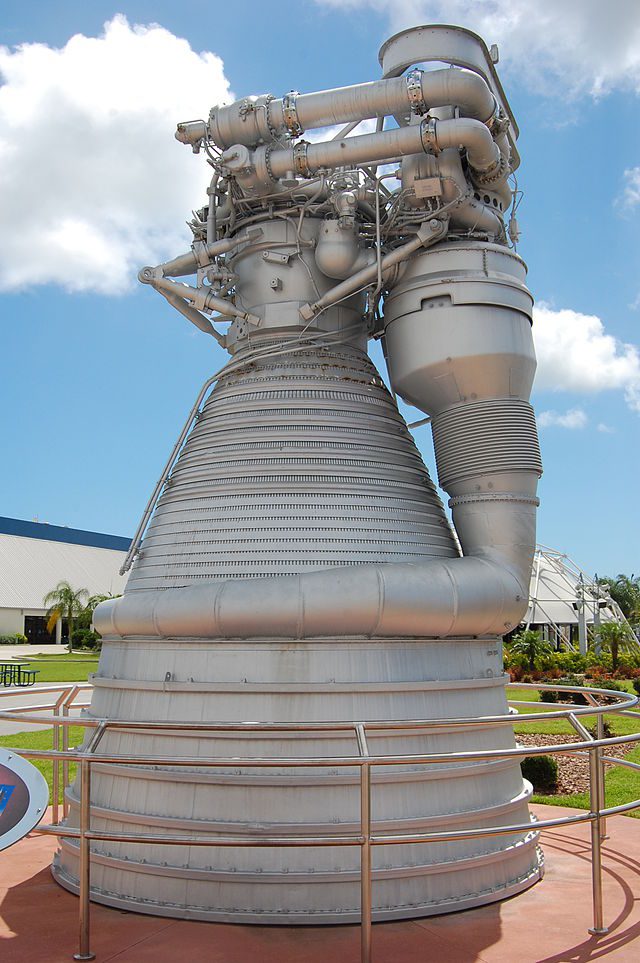
Before we go into the history of Rocketdyne, let’s first define what is a rocket engine. But let us keep it simple. Newton’s law is essential for the development of the rocket engine. So, Newton’s law asserts that every action generates an equal and opposite reaction. As a result, the rocket engine throws mass in one direction while the law pushes the rocket in another. All of this occurs under immense pressure, causing the engine to release a large amount of gas. However, the fuel must first ignite in a specific chamber, creating a torrent of hot gases. They cause the engine to fling down at high speeds, and the rocket to fly upward.
How it all started
Following World War II, the United States Department of Defense secured a deal with North American Aviation. The ministry wanted NAA to investigate the German-made V-2 missile and adapt its engine to SAE measurements.
The company attempted to construct a more powerful engine for the Navaho missile project, but the work proved challenging. As a result, the V-2 missile was improved and the company received the name Rocketdyne. In 1955, the NAA constructed a new factory in the Los Angeles suburbs. Twelve years later, NAA and its divisions united to form North American Rockwell. In 1973, this corporation changed its name to Rockwell International.
Active development and expansion of the product range
The company began to actively develop and work on new initiatives. First, a new S-3D design was created. Simultaneously, the A series of V-2 was created.
It should be noted that S-3D was later employed in the development of the Army’s Jupiter missile and subsequently in the Air Force Thor missile. Let us also note that, while Thor was not deployed for a long time, it did serve as a satellite launcher in the 1950s and 1960s. Also, Thor Delta served as the basis for the Delta series of space launchers.
Furthermore, Rocketdyne supplied the main engines for NASA’s developments. These were primarily the main engines for the Saturn rocket. By 1965, the company had manufactured the majority of rocket engines in the United States of America.
When the corporation was at its peak of success, it consisted of 27 different buildings. In 1960, a new headquarters was established.
In the 70s of the last century, Rocketdane even won a contract for the RS-25 Space Shuttle Main Engine. However, there was a decline in the production and development of military equipment. As a result, the company was downsized.
Production decline and reduction
In the 80s and 90s, there was a reduction in staff, which obviously had a negative effect on the company’s progress. Rockwell International has lost several parts of its former corporation. In 1996, NAA and Rocketdyne were sold to Boeing. Rocketdyne was part of a defense unit. However, it was sold again in 2005.
It should be mentioned that Rocketdyne not only develops rocket engines but has also begun to produce electrical power. These include nuclear power generation, solar power equipment, thermoelectric generators and more.
This is the story of Rocketdyne, a company founded in Los Angeles. We hope you found our information useful and came to the correct conclusions.