

The story of Helms Bakery is a classic example of how a local business can evolve into a cultural phenomenon. Founded in the first half of the 20th century on the border of Los Angeles and Culver City, this industrial bakery did far more than just supply the city with bread; it pioneered new standards in marketing and mass production. Its legacy lives on today in the form of a creative hub known as the Helms Design District. Read more at losangeles1.one.
Founding and Philosophy
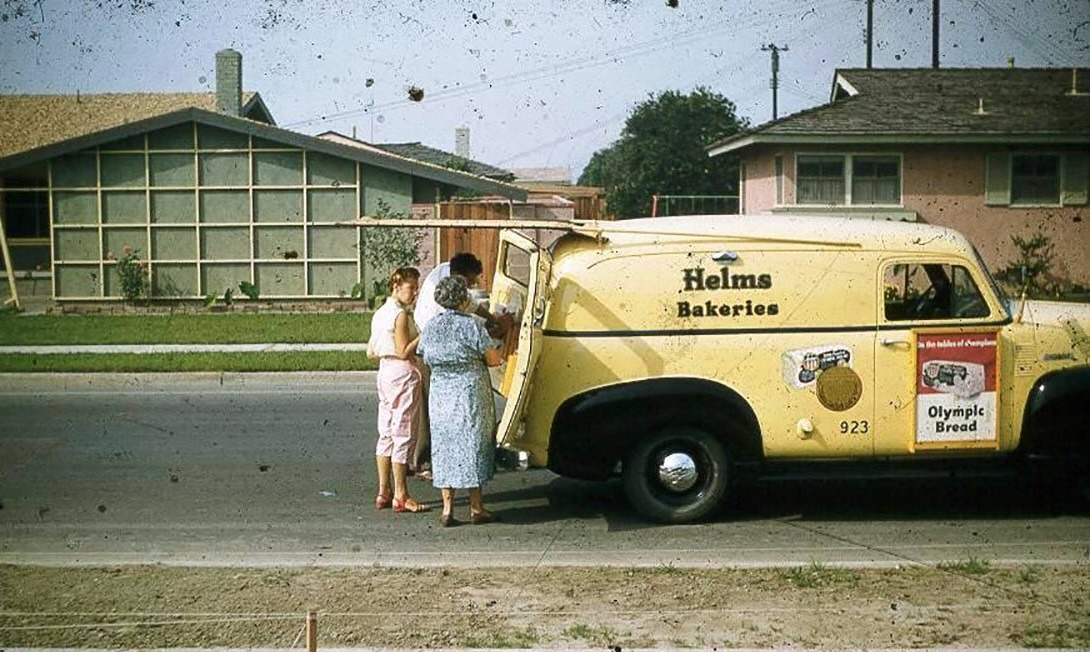
The bakery was founded by Paul Helms, a former New York banker who moved to California in 1926. After retiring, he decided to embark on a new venture. The bakery opened in 1931 and quickly became one of the most unique food companies of its era. The defining feature of Helms Bakery was the complete absence of traditional storefronts. Products weren’t sold in supermarkets or retail shops; instead, the company operated entirely through a delivery system. The company’s motto, “Daily at Your Door,” captured Helms’s desire to make high-quality products accessible in every home. In its early days, the bakery employed 32 people and operated 11 specialized delivery vehicles, which the founder insisted on calling “coaches” to distinguish them from standard delivery trucks.
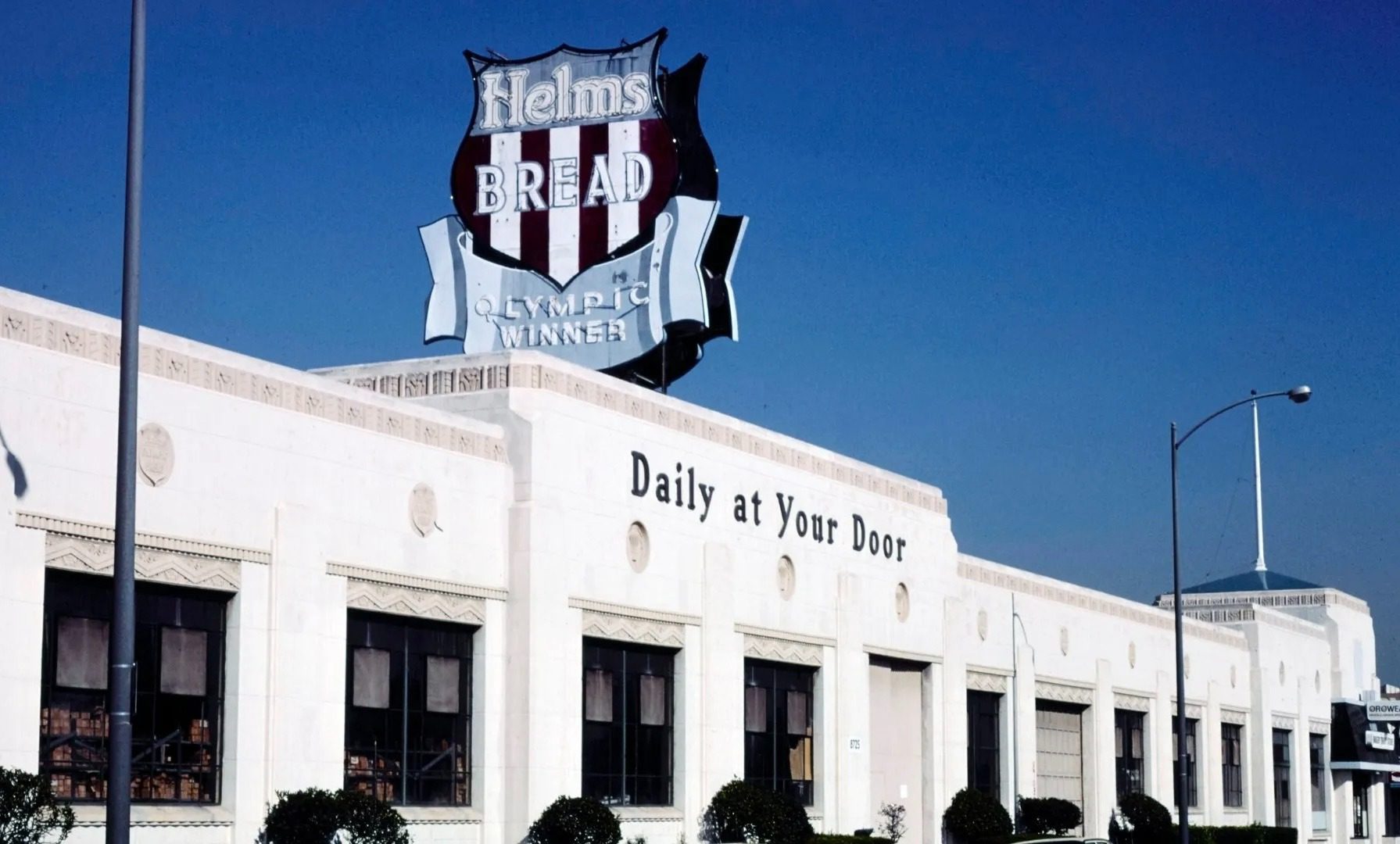
Constructed in 1930, the Helms Bakery building is a prime example of Zig Zag Moderne, a style within the Art Deco movement. Its architectural profile remains an iconic landmark of Culver City. While the exterior resembled a sleek office building, the interior housed a massive production complex filled with ovens, packaging lines, and logistics systems designed for high-volume manufacturing.
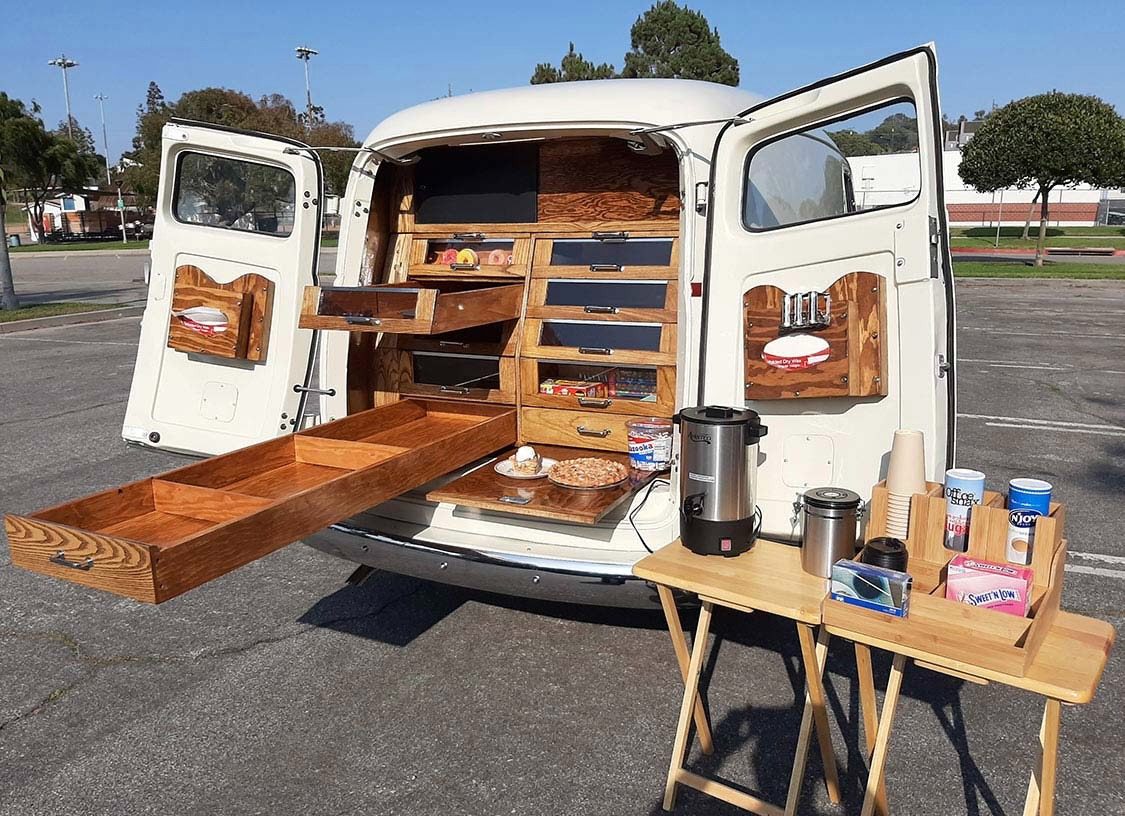
Bread and pastries were delivered fresh and warm—a core part of the Helms brand. At its peak, Helms Bakery produced hundreds of different products every day. The company quickly became a vital piece of the region’s food infrastructure. The business model was defined by its mobility and consistency: drivers followed strict routes, and customers grew accustomed to the “bakery visit” right at their doorstep. This format shaped new consumer habits. Each driver, known as a “Helmsman,” had a specific route and signaled their arrival with a distinct whistle. If a resident placed the company’s signature “H” sign in their window, the coach would stop for a delivery. This model was a clear precursor to modern home-delivery services.
Global Recognition
The company’s real breakthrough came in 1932 when Paul Helms secured the contract to supply bread for the 1932 Summer Olympic Games. Afterward, the bakery officially positioned itself as the “choice of Olympic champions.” This partnership brought national recognition to the brand. Athletes continued to order Helms products long after the Games concluded, and the collaboration with the Olympic movement lasted until the 1950s. The success had international reach as well: Helms Bakery recipes even sparked interest in Germany ahead of the 1936 Olympics, and American teams insisted on having the bread served at competitions across Europe.
The bakery rapidly expanded into one of the largest production facilities in the region. Its catalog boasted over 150 different products, ranging from bread and cakes to cookies and desserts. By the mid-1960s, the scale of production was staggering. Every year, the company used hundreds of railcars of flour, millions of eggs, and vast quantities of packaging materials. The production process was so streamlined that the bakery became a benchmark for efficient mass manufacturing. At the same time, it remained open for tours, proudly showcasing its transparency and technological sophistication.
A Cultural Phenomenon
Helms Bakery embraced aggressive marketing long before it became the industry standard. The company sponsored popular radio and television programs and promoted its products through cooking shows. The brand became associated not just with daily life, but with prestige. Helms bread was chosen by athletes, public figures, and participants in iconic events. The bakery even won awards at exhibitions and participated in parades, including the Tournament of Roses.
The final year of the company’s existence was marked by a symbolic event. In 1969, the bakery’s products became part of the Apollo 11 mission. It was then that Helms Bakery earned the unofficial title of “the first bread on the Moon.” This milestone was the culmination of a brand’s history that, over several decades, had traveled from a local business to a global symbol of quality.
Following Paul Helms’ death in 1957, the business continued to operate under the guidance of his family for some time. However, by the late 1960s, the delivery model began to lose its efficiency. The causes were numerous: shifts in American lifestyles, the rise of large supermarkets, increasing production and fleet maintenance costs, and the gradual decline of the “stay-at-home” culture that relied on mobile bakeries. In 1969, Helms Bakery officially ceased operations. The company’s leadership acknowledged that the door-to-door delivery model no longer met the needs of the time, bringing a nearly 40-year-old enterprise to an end.
The Helms Design District
After the bakery closed, the buildings were not torn down. In the 1970s, they were acquired by the Marks family, who began the adaptive reuse of the historic complex. The architectural integrity was preserved, retaining key features like original metalwork, beams, and windows. A pedestrian-friendly space was created, featuring galleries, furniture and design stores, restaurants, and art installations. In the 21st century, the site operates as the Helms Design District—a hub bringing together boutiques, restaurants, and design showrooms. In 2003, the iconic “Helms Olympic Bakery” neon sign was restored.
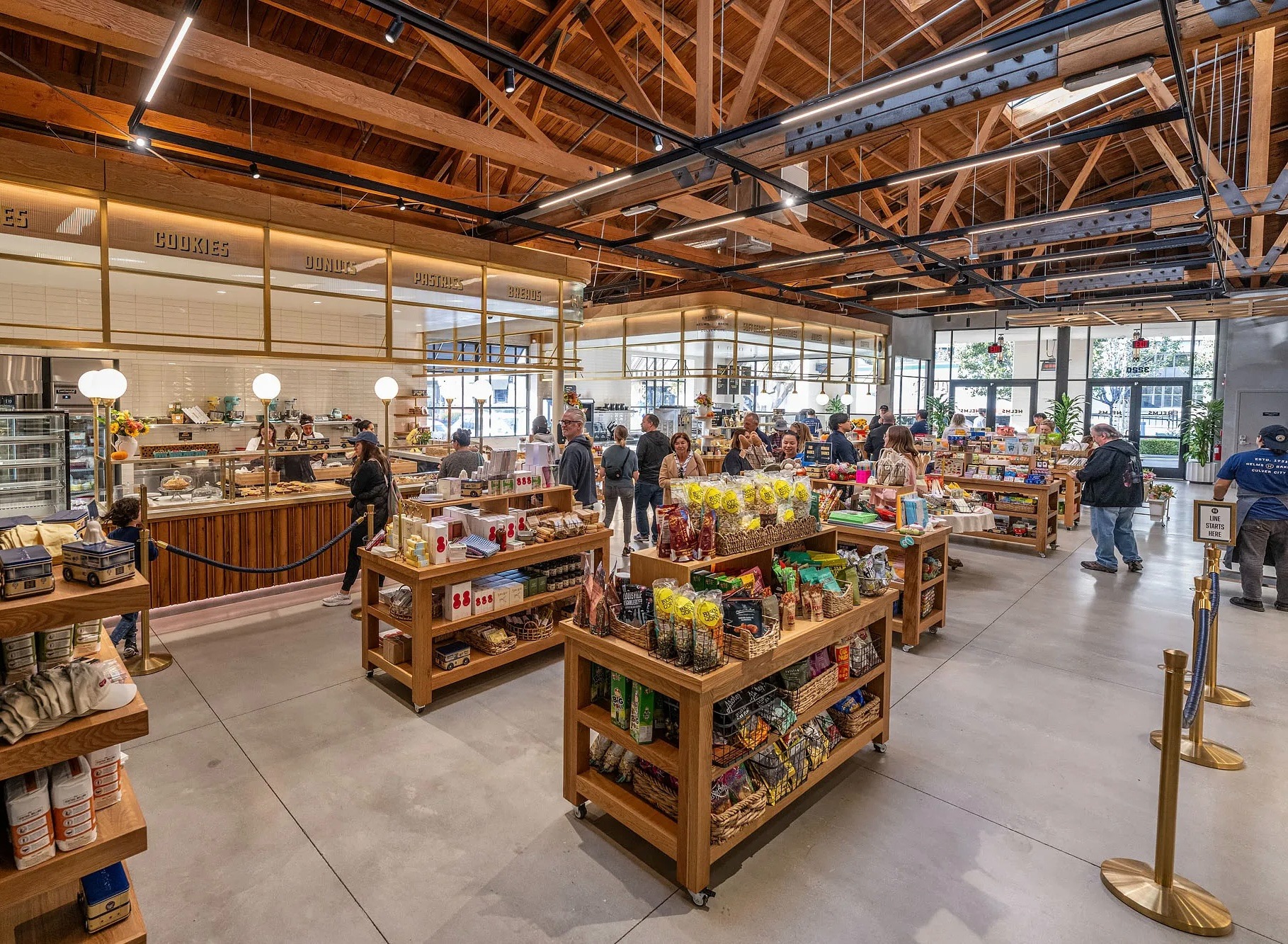
In 2012, plans to revive the Helms Bakery brand itself were announced. After a lengthy renovation, a new space officially opened on November 1, 2024. Designed as a modern interpretation of the historic bakery, the new complex covers approximately 14,000 square feet, functioning as an artisanal bakery, café, and culinary destination.
The interior of the revamped Helms Bakery blends industrial heritage with contemporary design. The space features soaring ceilings with original timber beams, abundant natural light, open-kitchen areas, and hand-painted signage. Visitors step into an environment that feels like a fusion of an historic building and a modern food hall. Today’s Helms Bakery offers a wide range of goods baked on-site, including fresh bread, baguettes, pastries, cakes, cookies, and pies, as well as light fare like salads and sandwiches, featuring both local and international influences. Special attention is paid to beverages, with a coffee bar serving house-roasted beans, alongside fresh juices, tea, and kombucha.
The story of Helms Bakery is more than just the history of a bakery. It is a narrative of urban growth, shifting economic models, and the power of a brand that became part of the cultural zeitgeist. As former industrial spaces are transformed into modern hubs, the Helms legacy lives on, reminding us of a time when bread was delivered to your door and quality was the top priority.