

The first public school was founded in Los Angeles in 1817. Since that time, the Los Angeles Unified School District has grown to 704 square miles and approximately 790 campuses. Over its nearly two-hundred-year history, the district has amassed an unparalleled collection of historically and culturally significant buildings in an assortment of architectural styles, from 19th-century wood-frame schoolhouses to 20th-century classical-style schools. Almost a third of the campuses are over 50 years old. These historic schools reflect the sequence of educational, social, political, technological, engineering and architectural achievements between the late 19th century and the 20th century. Learn how the educational process is structured in one of the best schools in Los Angeles, Ribet School. Read more on losangeles1.one.
Canoga Park Elementary School
The school is named after the former name of the community of Canoga. Canoga Park Elementary School shared a neoclassical building with local high school students. This building was demolished after 1933. A new Spanish Colonial Revival administration building and auditorium were constructed from plans drawn by architect Sumner Spaulding in 1935.
Dating back to 1939, Canoga Park High School’s auditorium features a mix of Spanish Colonial Revival. These were modern stylistic elements that dominated most buildings in southern California during the 1930s. Most of the current improvements to the campus occurred after World War II.
The student population of the elementary school is 612 people. At Canoga Park Elementary School, 23% of students consistently performed well in science. Enrollment of minority students in the school is 97%. The student-teacher ratio is 20:1. The student population consists of 48% female and 52% male students. 84% of students who do not have economic stability study at the school. The school also employs 26 full-time teachers.
Carpenter Avenue Elementary School
The primary school was opened in 1924. The school’s administration building is surrounded by mature trees and lush landscaping and dates back to 1938. Its modern style is emphasized by the fluted three-dimensional entrance made of reed.
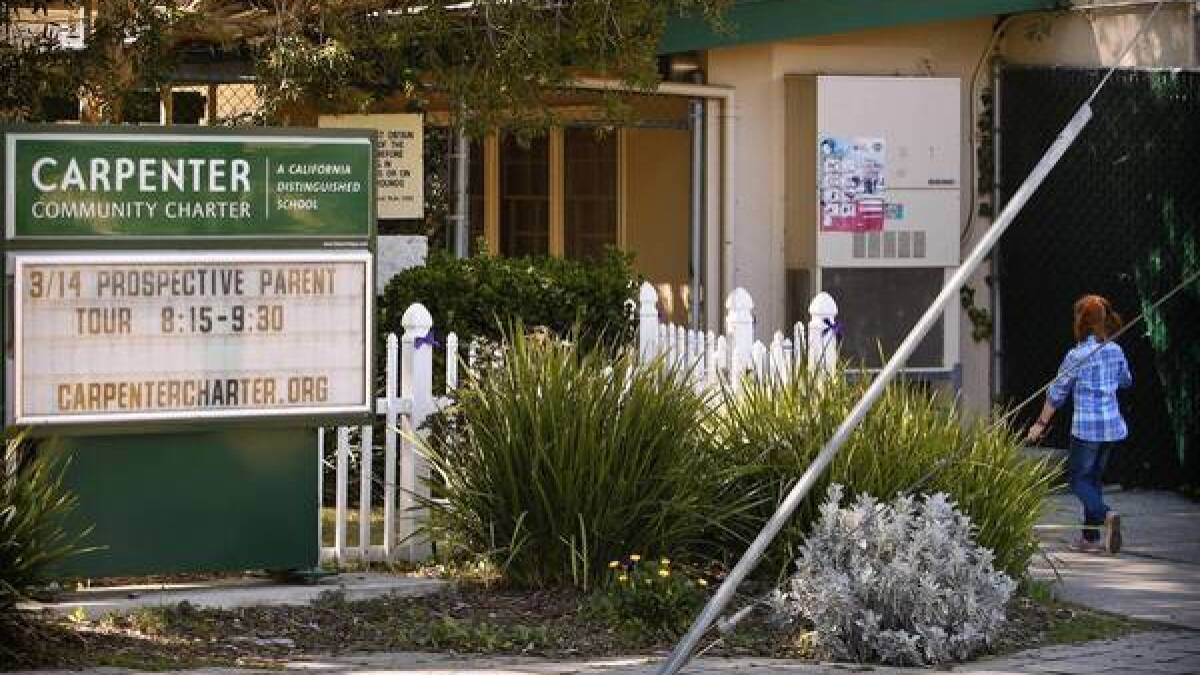
During the 2008–2009 academic year, the school enrolled 847 students with the following racial/ethnic profile:
- white 76.3%
- Hispanic 8.7%
- Asians 8.1%
- African Americans 4.6%
- Filipinos 1.3%.
The school doesn’t qualify for Title I funding, so it gets about $300,000 a year from parent fundraising efforts. On June 16, 2010, Carpenter Avenue Elementary became a charter school. It changed its name to Carpenter Community Charter School.
Carson Street Elementary School
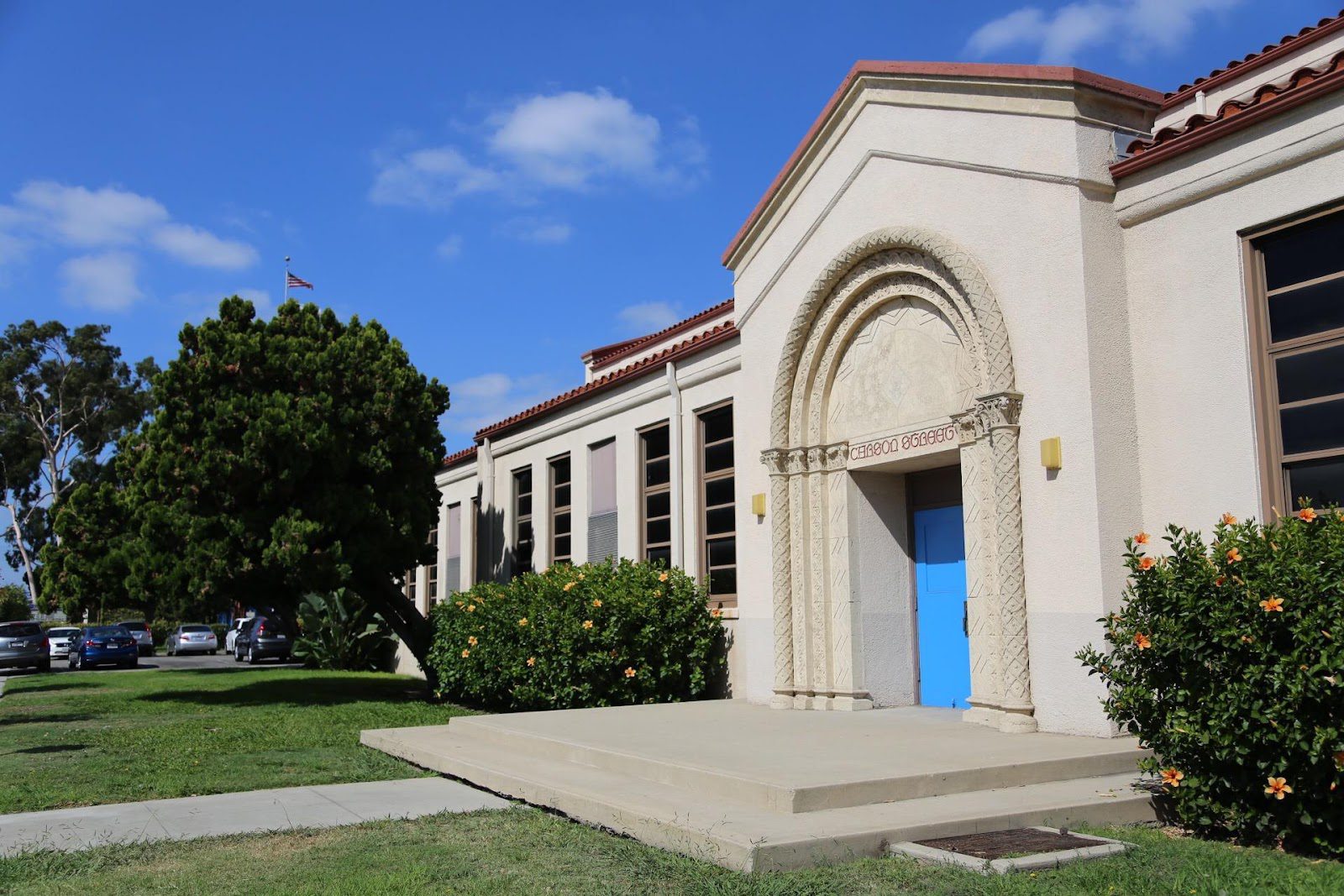
The intricately decorated main entrance is the center of the symmetrically arranged school building. The school was built in 1927 in an area of Los Angeles County that became the city of Carson in 1968.
Carson Street Elementary has about 700 students. Over 51% of students are at or above proficiency in math. Enrollment of minority students in the school is 95%. The student-teacher ratio is 21:1. The student population consists of 48% female and 52% male students. 66% of students who are not economically capable study at the school. There are 30 equivalent full-time teachers.
Corona Avenue Elementary School
Pioneer of International Style architect Richard Neutra was offered an opportunity to implement his progressive ideas for school design when the Los Angeles School Board commissioned an addition to Corona Avenue Elementary School. The school was built in 1934. Construction was completed the following year. Then, the new wing of the school was framed by sliding glass walls, which ushered in a new era of open classrooms.
Corona Avenue Elementary School has 764 students. Here, 27% of students scored sufficient or proficient in math. Enrollment of minority students in the school is 98%. The student-teacher ratio is 21:1. 76% of students in difficult economic circumstances study at the school.
Dorris Place Elementary School
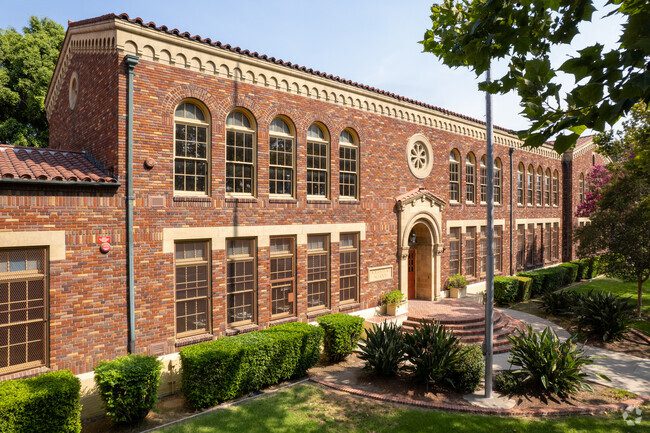
The primary school was opened in 1925. It is one of the smallest school buildings in Los Angeles. The building is made in the Romanesque Revival style. The Board of Education approved the design, which features multicolored brick exterior walls and terracotta finishes.
The school offers classes for students from pre-kindergarten through sixth grade, including one special day class for students from second through sixth grade. Enrollment is mostly over 300 students in kindergarten through sixth grade with an additional 38 students in the preschool program.
The school was awarded the California Pivotal Practice Award by Tony Thurmond. This award replaced the California Outstanding Schools program. It recognizes schools and districts that have implemented innovative practices at a time when the state of California required schools to offer distance learning due to the COVID-19 pandemic.
Susan M. Dorsey High School
The simplified form of the school was created by architects H. L. Gogerty and C. E. Noerenberg. The latter stated that the design of the campus was intended to architecturally and structurally express in a functional form the outer shell of the public education process. The school was built and opened in the fall of 1937.
The school was named after Susan Miller Dorsey, the first female superintendent of the Los Angeles Public Schools system. Dorsey was born in 1857 in Penn Yan, New York. She graduated from Vassar College in 1877 and spent a year teaching at Wilson College in Pennsylvania. In 1881, she married a Baptist minister, Patrick William Dorsey. That same year, the couple moved to Los Angeles, where he became pastor of the First Baptist Church on 6th Street and Broadway. Dorsey returned to teaching at Los Angeles High School in 1896, where she became vice principal.
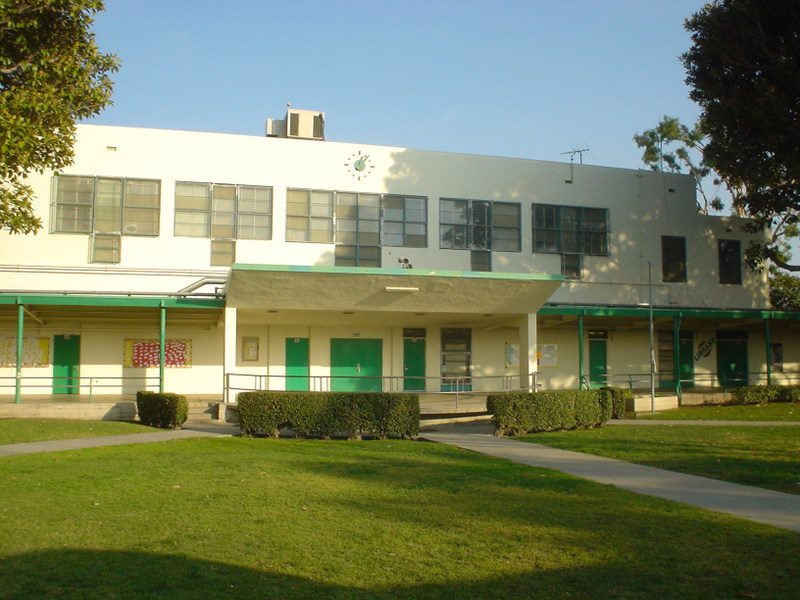
The school has an average of over 2,400 students. It is one of the few predominantly African-American high schools in the Los Angeles Unified School District, with 55% African American students and 45% Latino students.
The school building was the location for the high school scenes in Steven Spielberg’s 2022 semi-autobiographical film The Fablemans.
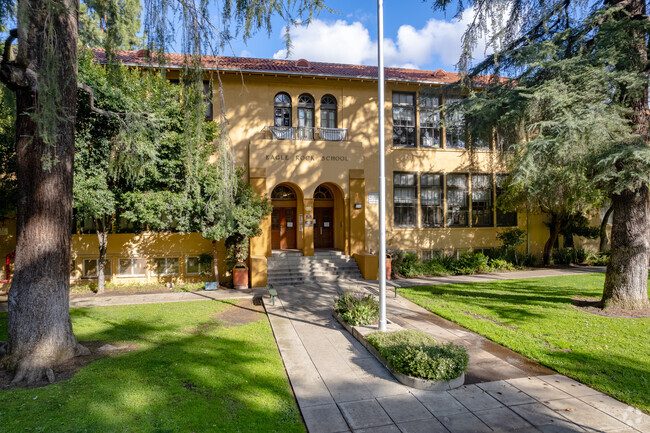
Eagle Rock Elementary School
The historic core of the primary school was built between 1917 and 1919, a few years after the school was registered in 1911. The Spanish Colonial Revival campus became part of the Los Angeles Unified School District when Eagle Rock School was annexed by the City of Los Angeles in 1923.
Eagle Rock Elementary is committed to full implementation of the California Common Core State Standards. Teachers actively collaborate and reflect on teaching practice, modeling and sharing their passion for lifelong learning.
How is cultural heritage preserved?
The Preserve LA initiative was designed to provide funds to preserve Los Angeles’ landmark buildings and sites of architectural, cultural and historical significance. Funded projects are intended to strengthen the practice of architectural conservation and serve as models for the preservation of other historic buildings and objects. The program’s award winners represent a range of Los Angeles landmarks, from historic residences and landscapes to museums, schools, libraries and places of worship.
Pre-World War II schools or modern schools with known associations with prominent architects were given priority in receiving the grant. In addition, digital photographs were taken of more than 100 campuses. A representative sample of 50 schools was surveyed and documented on the standard California Historical Resource Inventory Database.