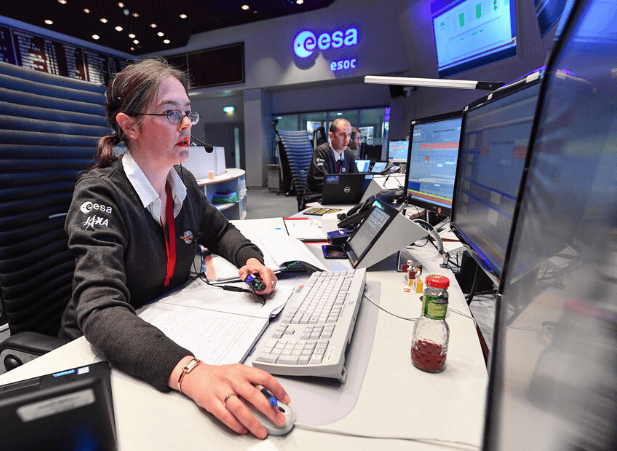
Picture this: you are standing inside a massive hangar where the scent of machine oil and cold titanium blends with the buzz of a high-energy tech hub. A few feet away, a 25-year-old engineer in a hoodie fine-tunes a booster’s autonomous landing algorithm right from their laptop. Behind a floor-to-ceiling glass wall, a two-story 3D printer quietly builds a rocket engine layer by layer from a liquid metal alloy. This isn’t a Hollywood movie set or a scene from a sci-fi blockbuster—it’s just another Tuesday morning in Southern California.
Without making much noise, Los Angeles has staged a massive industrial comeback. After the Cold War, the region nearly lost its status as an aerospace powerhouse. Today, it has breathed new life into shuttered manufacturing plants, turning them into a modern forge for interplanetary exploration.
Outdated bureaucracy has no place here. Commercial space ventures have completely rewritten the playbook, turning rocket science into a fast-paced, agile, and lucrative enterprise. losangeles1.one takes an inside look at how to break into this booming sector.
The Transformation of the Los Angeles Aerospace Hub
This is the story of historic infrastructure getting a high-tech second life. In the exact facilities where workers once assembled Cold War bombers and Apollo-era space hardware, private venture capital has built a cutting-edge aerospace ecosystem.
- Hawthorne ignited the transformation. Once a quiet industrial suburb defined by Northrop’s historic footprint, Hawthorne evolved into the unofficial capital of the commercial space revolution. Inside its cavernous facilities, the dream of reusable rocket boosters became reality. Today, it handles end-to-end development—from testing novel alloys to building mission-critical flight computers.
- Long Beach emerged as “Space Beach.” Anchored around Long Beach Airport, this district took over shuttered Boeing production sites. Startups here ditched traditional manufacturing assembly lines in favor of fully 3D-printed launch vehicles and automated small-satellite integration.
- El Segundo leaned into national security. Long recognized as a major installation for the U.S. military, El Segundo reinvented itself. While maintaining its defense roots, the city morphed into a premier center for national security space architectures, satellite communications, and autonomous orbital navigation.
- Pasadena provides the scientific foundation. Powered by Caltech, Pasadena drives fundamental research across deep space exploration. Its labs pioneer everything from next-generation Mars rover robotics to deep-learning models built to interpret complex telemetry.

Industry Titans and Startups: The Employer Map
Southern California’s aerospace scene is organized across distinct geographic hubs, each anchored by market leaders. Hawthorne remains the engine of the region’s commercial space push, led by SpaceX’s massive manufacturing footprint and aggressive hiring pace. Down the 405 in Long Beach, the “Space Beach” corridor is home to Relativity Space and its large-scale additive manufacturing, Rocket Lab’s small-launch operations, Varda Space Industries’ in-orbit manufacturing facilities, and Apex’s satellite bus production lines.
El Segundo serves as the focal point for defense space and advanced avionics, housing major players like Aerojet Rocketdyne, Millennium Space Systems, The Aerospace Corporation, and Slingshot Aerospace. Pasadena anchors the region’s academic and exploratory work: alongside Caltech, it hosts NASA’s Jet Propulsion Laboratory (JPL) and Honeybee Robotics, known for designing specialized mechanisms built to withstand the harshest extraterrestrial conditions.
In-Demand Roles in Aerospace
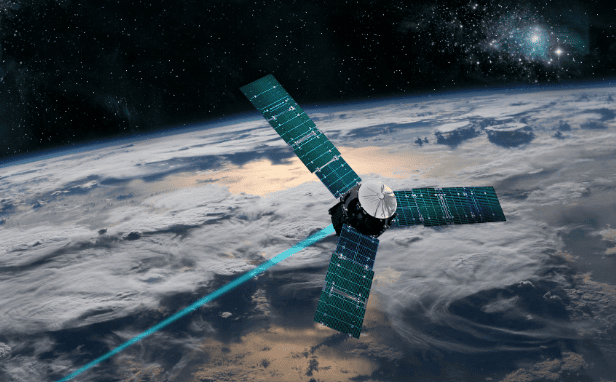
Rocket companies are no longer just looking for astrophysicists with doctorates. Modern launch systems are roughly 80% applied engineering, materials science, and software architecture.
| Role | Core Responsibilities | Tech Stack & Skills |
| GNC Engineer (Guidance, Navigation & Control) | Develop algorithms that plot trajectory profiles and guide reusable boosters back to floating drone ships with pinpoint accuracy. | C++, Python, MATLAB/Simulink, modern control theory, rigid-body kinematics. |
| Additive Manufacturing Engineer | Operate, tune, and scale industrial metal 3D printers (DMLS/SLM); evaluate microstructural defects in engine thrust chambers. | CAD (Siemens NX, CATIA), metallurgy (titanium and Inconel superalloys), FEA modeling. |
| Embedded / Firmware Engineer | Write low-level, fault-tolerant code for flight controllers managing critical pyrotechnic valves, actuators, and solar arrays. | C, FreeRTOS/embedded Linux, CAN, SPI, Ethernet protocols, bare-metal microcontrollers. |
| Test Engineer | Execute static hot-fire engine runs and simulate launch environments using thermal vacuum chambers and shaker tables. | LabVIEW, data acquisition (DAQ), high-pressure pneumatic and cryogenic fluid systems. |
| Thermal Protection Systems (TPS) Engineer | Design heat tiles, ablative shields, and coatings that keep structures intact through 17,500 mph atmospheric re-entries. | Ansys Fluent, COMSOL, radiative and aerothermal heat transfer analysis. |
Non-Technical Opportunities and Salary Expectations
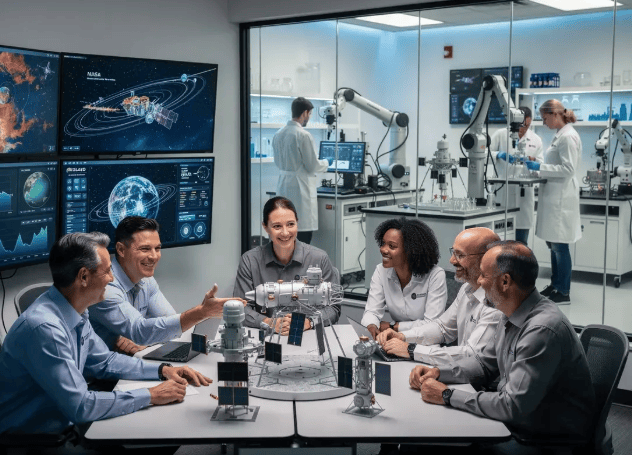
The industry needs much more than flight software engineers. Rapid production cycles have sparked massive demand for supply chain coordinators, strategic procurement specialists, technical recruiters, space law attorneys, and regulatory compliance experts familiar with FAA and FCC licensing.
Base compensation for mid-level engineering positions (GNC, Embedded, Test) in the Greater Los Angeles area typically ranges between $110,000 and $180,000 annually, not including performance bonuses and equity incentives.
While that pay scale looks strong on paper, Southern California’s cost of living cannot be overlooked. Combined federal and California state taxes take a bite of roughly 30% to 35% from gross pay. A standard one-bedroom apartment in Hawthorne or Long Beach commands between $2,500 and $3,500 per month. Factor in healthcare contributions and the costs of owning a car—which remains non-negotiable in LA—and those salaries provide a comfortable living, but certainly not reckless luxury.
How to Break In: A Practical Step-by-Step Strategy
The assumption that aerospace companies hire only generational geniuses is simply untrue. The commercial space sector operates on pure, measurable execution.
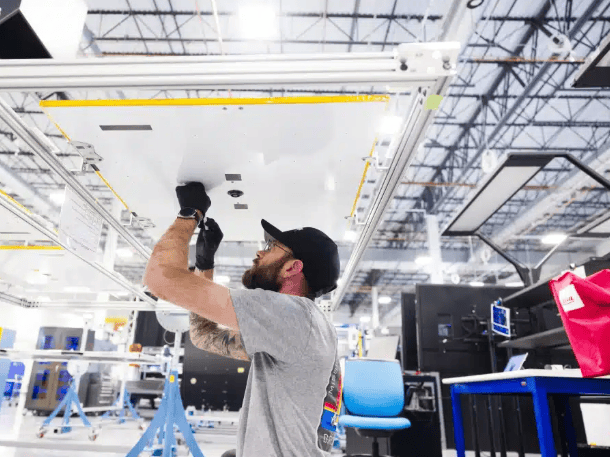
- Prioritize hands-on project work over pure pedigree. Technical recruiters consistently value applied problem-solving over an immaculate GPA. Collegiate competition teams—such as Formula SAE, the University Rover Challenge, or amateur rocketry and drone clubs—are gold standards. Demonstrating that you can troubleshoot failing hardware on an active test stand proves you can handle real engineering pressure.
- Develop hybrid hardware-software capabilities. Candidates who bridge the gap between physical mechanics and code routinely edge out single-discipline specialists. For instance, pairing an understanding of thermodynamics with microcontroller programming makes an applicant ideal for thermal regulation and environmental control roles.
- Maintain a public portfolio and GitHub repository. Engineering hiring managers want visible evidence of competence. Showcase your work with clean CAD models of complex assemblies, source code from orbital dynamics simulations, and video walk-throughs of benchtop electronics testing.
- Network intentionally across local hubs. Skip the standard corporate job boards and get into the rooms where working engineers congregate. Attending regional industry gatherings, rocketry hackathons, and hardware meetups across Long Beach and Hawthorne opens paths to internal employee referrals, effectively bypassing automated resume filters.
- Understand ITAR regulations. Because rocketry overlaps with defense systems, most aerospace jobs in the United States are subject to International Traffic in Arms Regulations (ITAR). Candidates typically must qualify as a “U.S. Person” (a U.S. citizen or lawful permanent resident holding a Green Card). Candidates without this status should focus on multinational space companies, European or international subsidiaries, or teams offering H-1B sponsorship, though the available pool of positions is significantly smaller.
Where to Find Jobs and Build Industry Connections
Running a successful job search in commercial space requires combining direct company applications, specialized job aggregators, and active community participation. Start by routinely checking the Careers sections on the official sites of primary operators like SpaceX, Rocket Lab, and Relativity Space, where critical openings appear first. To cast a wider net, tap into dedicated industry platforms such as Space Crew, Space Angels, and Space Job Board.
Concurrently, push past conventional job applications. Direct connections with recruiters and engineering leads happen through community channels—such as aerospace-focused Slack and Discord groups—and in-person meetups, including the popular Space Beach Club gatherings in Long Beach.

Your Ticket to the Stars
The divide between starry-eyed dreamers and practical builders has collapsed. The people designing tomorrow aren’t waiting on government directives; they are fabricating flight articles inside factory hangars, running on caffeine, and solving hard design problems while static test stands rumble in the background. Southern California shows that reaching orbit doesn’t call for superheroes. It demands disciplined labor, first-principles thinking, and an obsession with testing hypotheses in the real world.
At the same time, candidates should know what they are getting into: the commercial space sector demands absolute commitment. Companies in this space are famous for intense schedules—60-hour workweeks, uncompromising deadlines, and the real threat of burnout are everyday realities. Building flight hardware is a marathon run at a full sprint, where the wonder of space exploration is balanced by relentless, high-pressure execution.
Every validated valve assembly, optical payload sensor, and optimized trajectory script is more than another closed ticket on an engineering sprint board. It is another structural component in building an interplanetary society. The door is wide open for anyone ready to trade an ordinary office cubicle for a shop floor where the future is being built. The only question is: will your fingerprints be on the hardware that touches down on another world?