

Forever 21 is an American dream story, created by an immigrant family that transformed a small store in Los Angeles into one of the world’s most influential brands within a few decades. Founded in 1984 by South Korean couple Do Won Chang and Jin Sook Chang, the company became a symbol of fast fashion—an industry that democratized style and made trends accessible to everyone. However, the path from success to decline was rapid: corporate conflicts, financial crises, accusations of plagiarism, and two waves of bankruptcy showed that fashion, like fame, is not eternal. Read more at losangeles1.one.
First Steps in Los Angeles
On April 16, 1984, the Chang couple opened their first store, Fashion 21, in the Highland Park neighborhood of Los Angeles. The small retail space, only 84 square meters (about 900 square feet) in size and built with $11,000 of family savings, sold apparel inspired by styles from South Korea. In its first year, the store earned $700,000—a figure that signaled a massive opportunity for expansion.
Soon after, the brand was renamed Forever 21, symbolizing youth and dynamism. The business model transitioned into the fast fashion format: quickly copying trends, producing at minimal cost, and updating collections weekly. Throughout the 1990s, the company actively opened stores in shopping malls.
Explosive Growth
The early 2000s marked the “golden age” of Forever 21. In 2005, the company acquired the Gadzooks chain for $33 million, nearly doubling its store count to 400. Revenue skyrocketed from $640 million in 2005 to $1 billion in 2006. New retail spaces often exceeded 25,000 square feet, offering collections for men, women, and children.
In 2006, the first 40,000-square-foot flagship store opened in Pasadena—a symbol of the company’s transition to a major empire. By the end of the 2000s, the company already owned an online store, the For Love 21 accessory network, and boasted a profit of over $124 million with assets worth $1.4 billion.
The Forever 21 Style
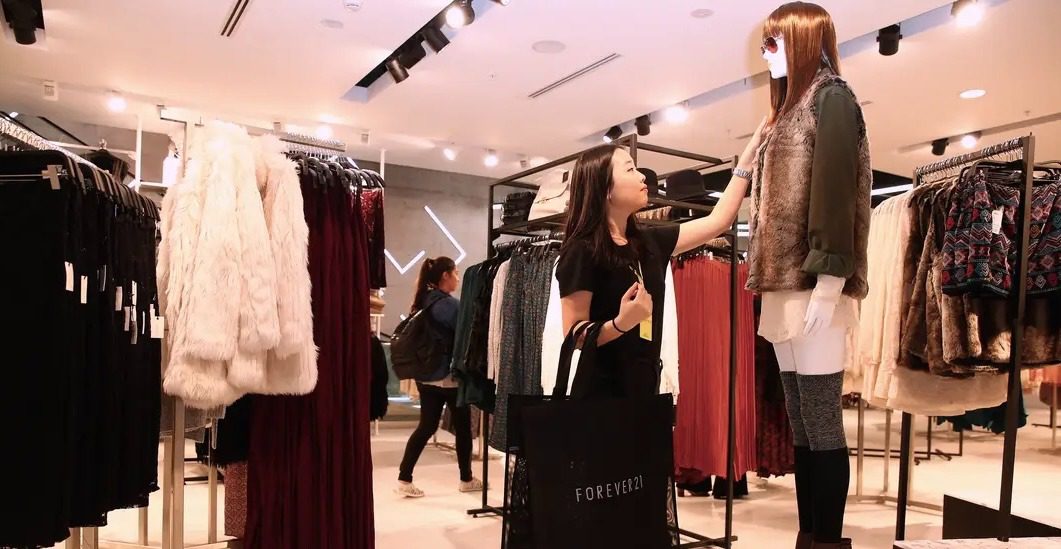
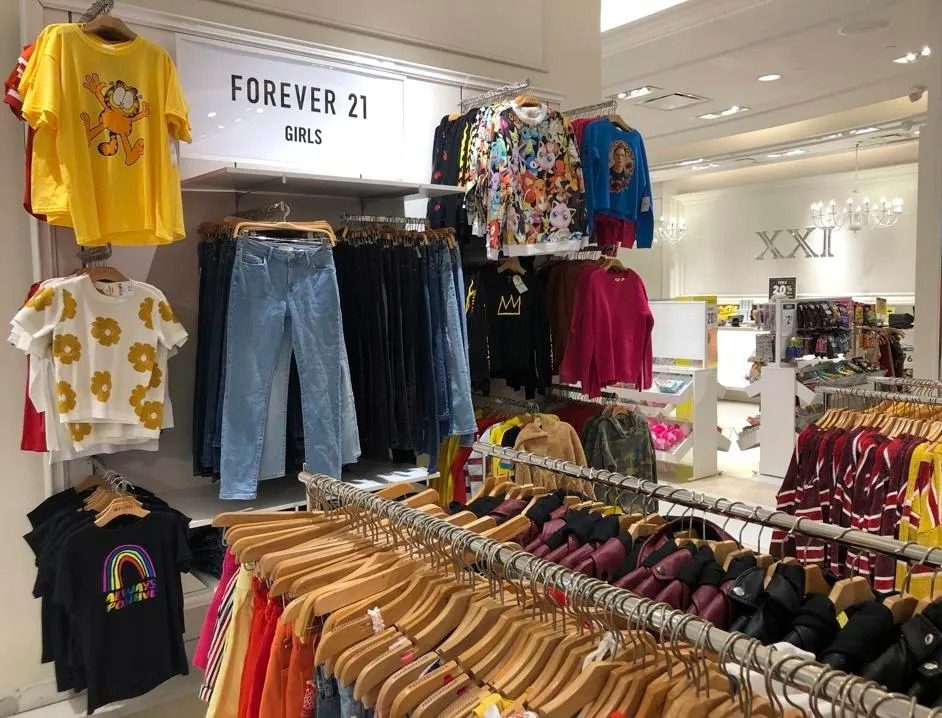
Forever 21 is a brand that embodies youth, dynamism, and the constant refresh of fashion trends. Its style can be characterized as fast fashion with a bright emphasis on street, casual, and youth-oriented clothes. The core idea is to make runway trends accessible to everyone. At Forever 21 stores, you could find everything—from basic denim, hoodies, and t-shirts to evening dresses and accessories. The brand’s clothing often reflected current cultural influences: music, movies, social media, streetwear, and even elements of retro fashion.
Forever 21 targeted teenagers and young adults eager to experiment with style and self-expression. This was fashion for those who wanted to look stylish right here, right now. Collections frequently featured a mix of styles: athleisure, grunge, romantic casual, sometimes with notes of the glamorous Y2K or 1990s aesthetics.
Scandals, Lawsuits, and Public Criticism
With increasing popularity came problems. Forever 21 repeatedly found itself at the center of lawsuits over the alleged plagiarism of designer models. Brands like Diane von Fürstenberg, Anna Sui, and Trovata accused the company of copying their collections. In most cases, the disputes ended in settlements, but the brand’s reputation suffered.
In 2011, Forever 21 was involved in a series of scandals—from selling jewelry with toxic cadmium to releasing t-shirts with sexist slogans like “Allergic to Algebra.” That same year, the company received a wave of criticism for trying to shut down the blog WTForever21.com, which sarcastically commented on their products.
In the labor sector, Forever 21 was accused of partnering with factories where workers were not paid the minimum wage. Lawsuits were filed against the company in California, and the U.S. Department of Labor conducted investigations into working conditions and safety in its warehouses.
By 2013, Forever 21 had over 480 stores and annual revenue of $3.7 billion. The founders’ daughters, Linda and Esther Chang, joined the management, representing the second generation of the family business. In 2015, the company hit a record—$4.4 billion in global sales and more than 260 stores outside the U.S. Forever 21 actively expanded in Brazil, India, and the Middle East, but was simultaneously forced to exit Spain and Belgium. In 2017, the company launched its own beauty and accessory chain, Riley Rose, but that same year, revenue dropped to $3.4 billion—the first major decline.
Competition and Bankruptcy
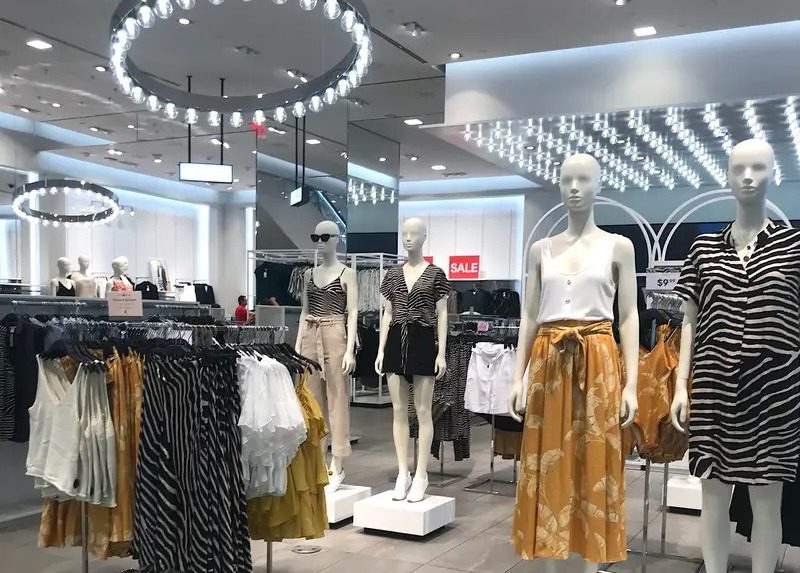
The emergence of powerful competitors like H&M, Zara, ASOS, and especially Shein, shattered Forever 21’s business model. In 2018, the company began closing stores in the Netherlands, Thailand, Ireland, and Taiwan. By 2019, sales had dropped by 32%, and a scandal involving “diet bars” included in packages of plus-size clothing only worsened the brand’s image.
On September 29, 2019, Forever 21 filed for Chapter 11 bankruptcy, reduced its presence in 40 countries, and focused on the U.S. and Latin American markets. Over the next year, the company exited Canada, Japan, Portugal, Hong Kong, and the United Kingdom.
In February 2020, the brand was acquired by the SPARC Group—a joint venture between Simon Property Group, Brookfield Properties, and Authentic Brands Group (ABG). The new management began restructuring.
Forever 21 relaunched its online store in 30 countries and returned to the UK and EU markets. Partnerships with Hudson’s Bay in Canada and Aditya Birla Fashion and Retail in India helped restore some revenue. In 2021, the company opened over 500 stores and partnered with the JCPenney chain. That same year, it announced the creation of its own metaverse—a virtual game where users could open their own digital Forever 21 stores. In 2022, the brand began collaborating with Hervé Léger, Barbie, and Sports Illustrated.
However, the problems didn’t disappear. A failed integration of a new e-commerce platform with Bolt Financial led to a loss of $150 million in sales, and legal disputes continued until 2023. In August 2023, Forever 21 and Shein formed a joint venture, exchanging minority stakes to combine the offline network and digital strength of both brands.
Second Wave of Bankruptcy
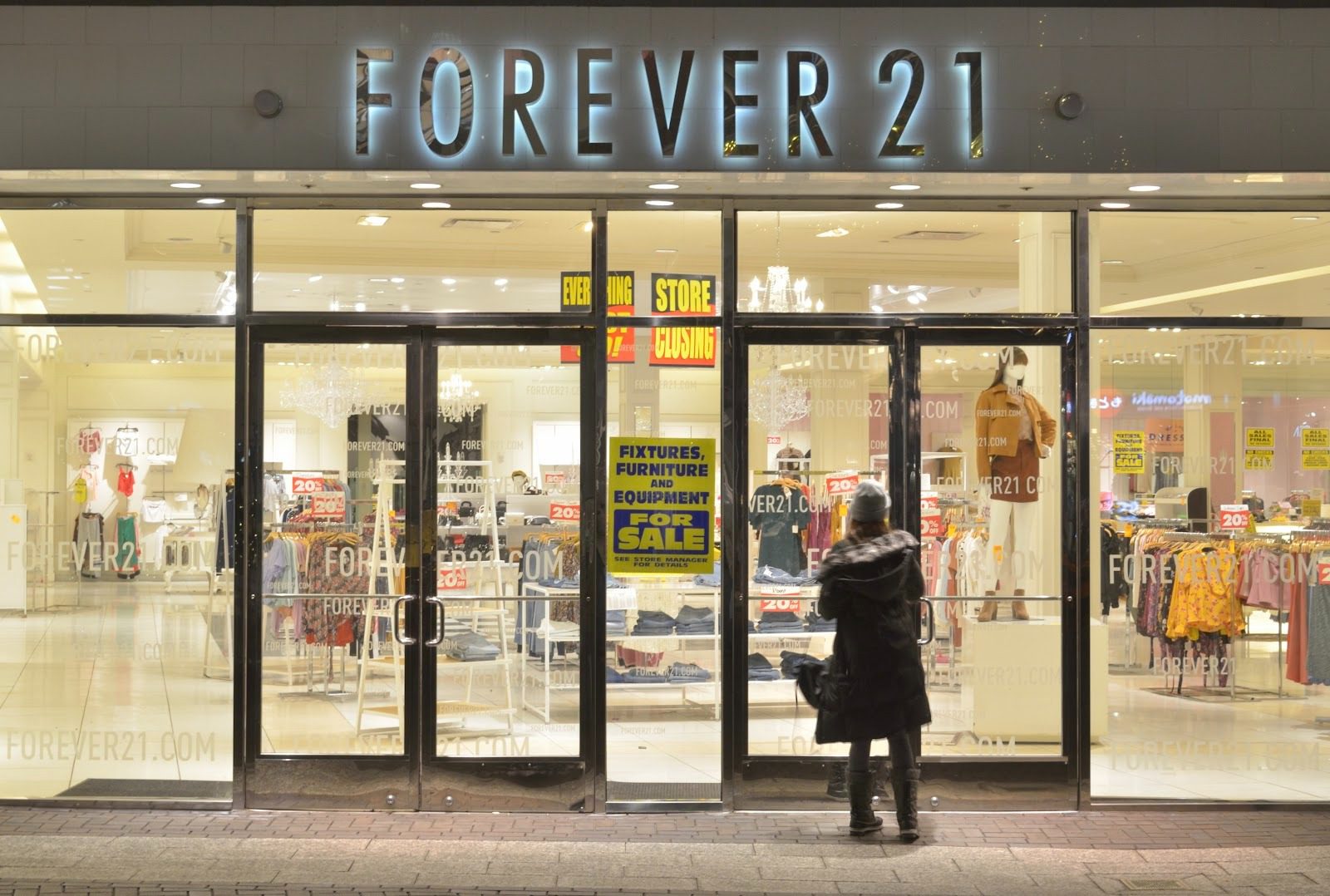
Despite restructuring attempts, Forever 21 failed to adapt to the new realities. In February 2025, the company announced the closure of 215 unprofitable stores, and on March 17, it filed for its second bankruptcy in Delaware. Sales plummeted, debts reached $5 billion, and the main factors in the decline were reduced foot traffic in shopping malls and pressure from competitors like Temu and Shein.
On May 1, 2025, Forever 21 closed all its U.S. physical stores. Yet, the brand did not disappear entirely: in September 2025, a relaunch as an online-only retailer was announced. Unique Brands became the operator of the American e-commerce platform, while Mark Edwards Apparel and Kidz Concepts secured licenses for the wholesale lines of women’s and children’s clothing.
Forever 21 is more than a brand story. It is a mirror of an entire era when speed and affordability became the main values in fashion. The company allowed millions of people to feel stylish regardless of their income, but simultaneously, its model contributed to the crisis of overproduction and labor exploitation. From a small store in Los Angeles to a giant with thousands of employees in 60 countries, Forever 21 traveled from a symbol of success to a cautionary tale for the entire industry. And while its physical stores have vanished from American streets, the brand continues to live on in the digital world.