

Howard Hughes entered world history as an inventor, aircraft designer, and film producer. The Marvel character Iron Man was famously modeled after him. Airplanes were the lifelong obsession of his life. He personally designed them, flew them, and broke aviation records. He went down in history as a brilliant aviator and entrepreneur whose engineering inventions profoundly influenced the development of aviation. Despite incredible successes, Hughes’ life was overshadowed by health issues and severe mental disorders. Why was he called the world’s most powerful man? Also, learn about the life story of Facebook co-founder Sean Parker. More on losangeles1.one.
Biography
Howard Hughes was born in September 1905. He was the only child of entrepreneur Howard Robard Hughes Sr. His father was a successful inventor who made a vast fortune in Texas oil drilling. From childhood, the boy had a mathematical mind, was fascinated by physics, and dreamed of becoming an engineer. At the age of 12, he built a motorized bicycle and a radio transmitter, and he independently learned Morse code. He was also passionate about photography. Howard’s father encouraged his son’s pursuit of science, paying him $5,000 a week for personal expenses. He attended private schools but was not particularly fond of studying. After graduating from high school, he enrolled at Rice University. During this period, he was primarily interested in having fun with his father’s money and dreaming of becoming the best golfer in the world. But his entire life changed when he lost both parents by the age of 20. He became the heir to a huge fortune—the oil drilling company Hughes Tool Company. By the late 1960s, his wealth was estimated at $2 billion.
The billionaire’s personal life was tumultuous. Howard was married twice and had dozens of affairs with Hollywood actresses. The only true love of the billionaire is said to be actress Katharine Hepburn. They lived together for almost a year before separating. Howard had no children. From his youth, doctors noted psychological eccentricities. He called it quirkiness, but over the years, his mental state only worsened. Untreated syphilis combined with large doses of codeine eroded his psyche. The businessman passed away in 1976 during a flight. Since he had no direct descendants, his relatives, friends, and even the Church fought over his fortune based on various wills. The court decided to divide the billionaire’s assets between the US Internal Revenue Service, and the authorities of Texas and California.
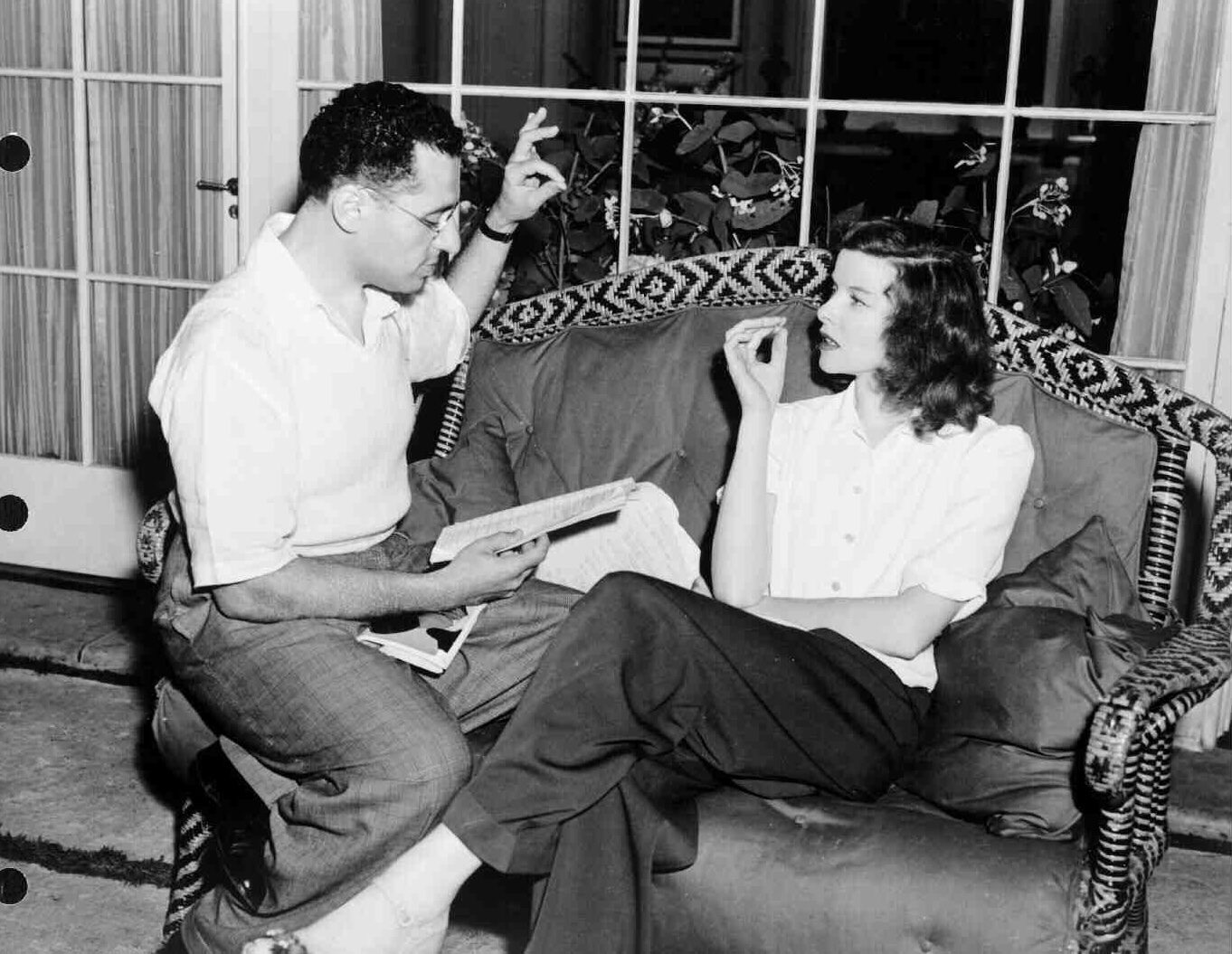
Howard Hughes was a man who was unafraid to defy convention and redefine what was possible. His ambition stretched far beyond aviation and Hollywood. The scandals surrounding his personal life and financial dealings only highlighted his mysterious image. Despite this, Hughes remained an influential figure until his death in 1976. His legacy includes technological achievements, cinematic masterpieces, and also lessons about the complexities that can accompany extraordinary talent and ambition. Hughes left his mark on many fields, and his name is still synonymous with innovation and genius.
Hughes and Cinema
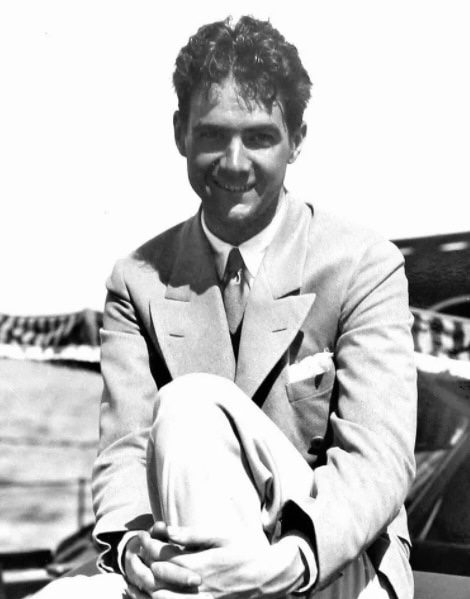
Hughes’ fascination with cinema never faded. He entrusted his father’s company to other managers and immersed himself in the world of film. Thanks to his father’s fortune, he was able to finance filmmaking. In 1928, his film “Two Arabian Knights” won an Academy Award. This inspired Howard to continue making films. His next film, “Hell’s Angels,” brought him global fame. For these shots, he acquired over 80 old planes and personally performed the most complex stunts.
Hughes and Aviation
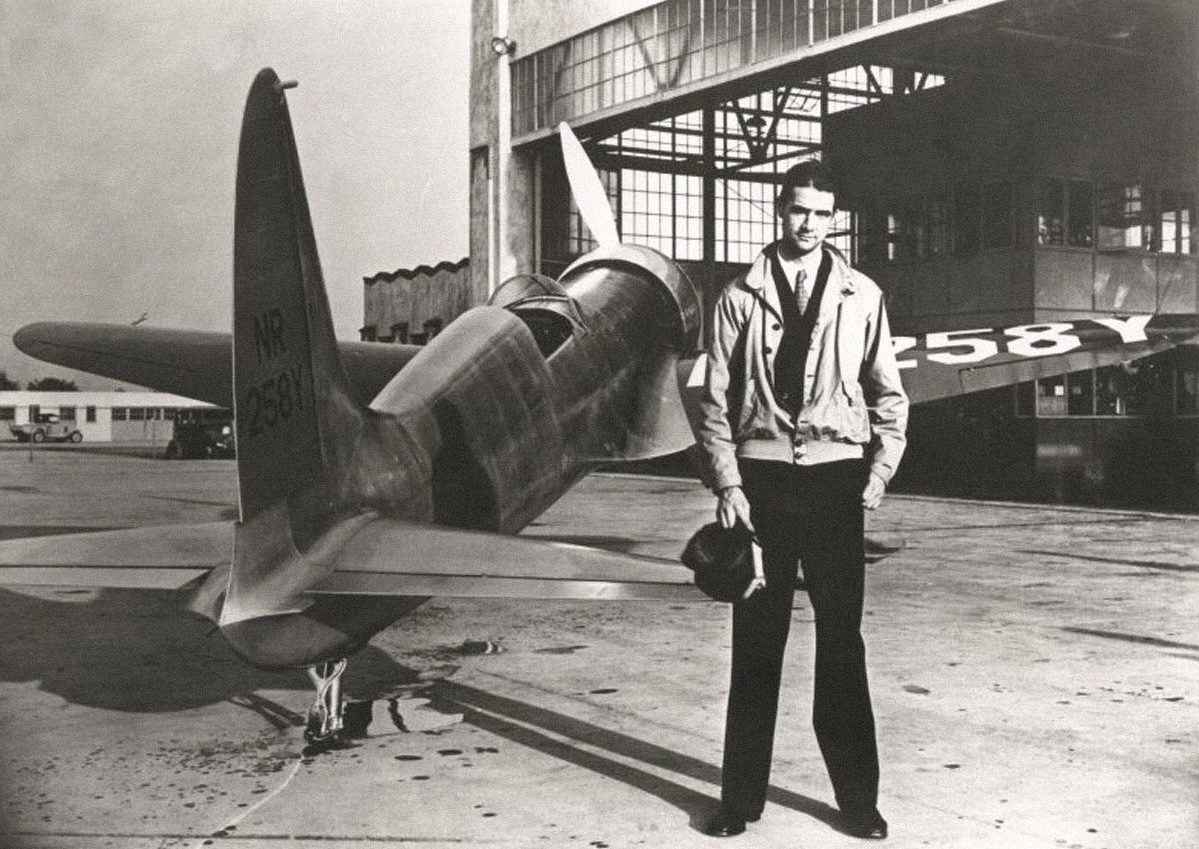
In 1932, he founded the research and development company “Hughes Aircraft.” The company’s achievements brought him not only vast wealth but also fame as an outstanding inventor. In California, he set up a small workshop, an office, and an S-43 Sikorsky Amphibian airplane. He trained rigorously and decided to participate in a competition hosted by the US Department of Defense, which required him to build his own aircraft. And Howard did just that. The resulting plane was unique, featuring modern cladding and hydraulic landing gear. Howard did not win the competition, but he flew his own plane for over seven hours.
In 1938, he began preparations for a round-the-world flight. For this purpose, he modified a Lockheed 14 passenger aircraft. On July 10, 1938, Hughes and five other participants flew out of a New York airfield. They covered 23,612 kilometers (14,672 miles) in 3 days, 19 hours, 8 minutes, and 10 seconds, setting a new record.
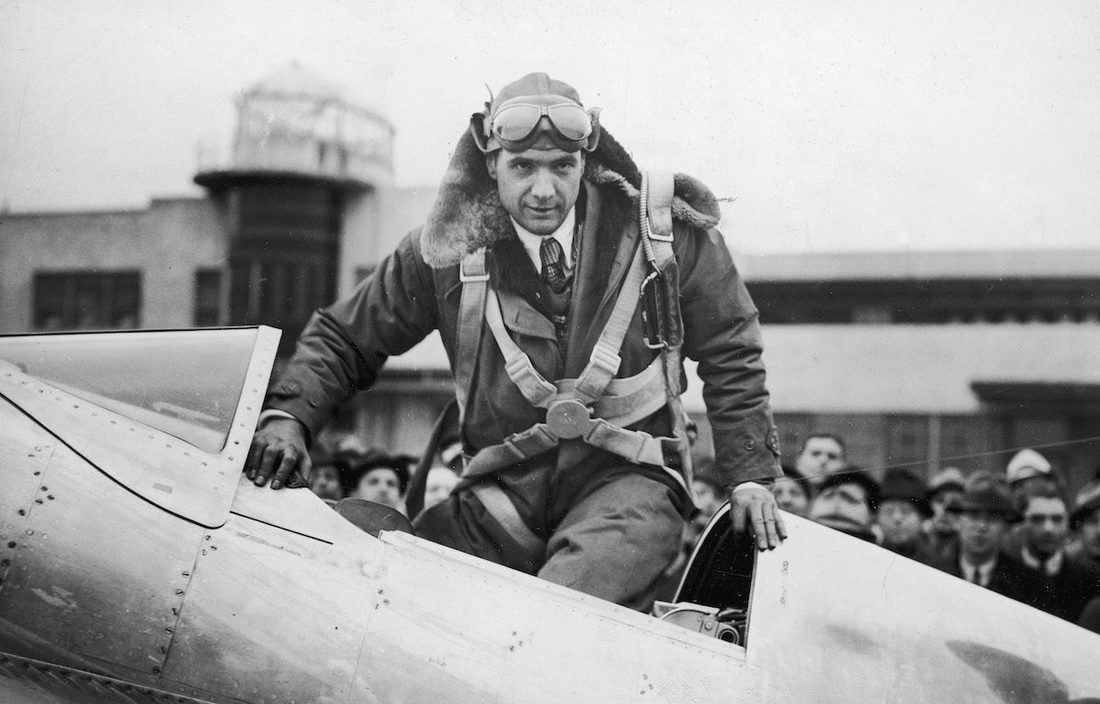
Before World War II, he acquired Trans World Airlines (TWA). Civil aviation was not yet in high demand, but he saw potential for growth. To transport people, he bought exclusive L-049 Constellation airliners. The development of the civil aviation industry was halted by World War II. Hughes dedicated his planes to the needs of the US Army. It wasn’t until a decade after the war ended that the civil transport sector began to recover. Among Howard’s innovations were a moving target recognition system, a missile launch control module, and computers. These developments allowed the company to become a major supplier to the US Department of Defense. Later, his company was commissioned by NASA to design and build the unmanned Surveyor 1—the first American spacecraft to achieve a soft landing on the Moon.
Hughes and His Business Empire
The businessman was not only fascinated by aviation. He launched ventures in various fields: brewing, electronics, cinema, and casinos. He founded the Howard Hughes Medical Institute (HHMI), which became one of the leading research centers in genetics, biology, and immunology. Scientists who worked at the institute repeatedly received Nobel Prizes. He was often ill, which fueled his lifelong interest in medicine.
In 1966, the billionaire moved to Las Vegas. He became captivated by the gambling business, and his wealth allowed him to acquire anything he wanted. He soon owned a casino, a hotel, a television channel, and even an airport. Within four years, the businessman controlled up to one-third of Las Vegas’s revenue.
Hughes Versus the Government
Because Howard actively developed his business while concealing his income, he began having problems with the government. After World War II, Howard’s company was sued for misappropriation of funds from military contracts. Although the charges were eventually dropped, it damaged the billionaire’s reputation.
One of the most high-profile accusations involved the founding of the Medical Institute. He established the institute as a charity organization, making its activities non-taxable. Over two decades of legal proceedings in this case, the businessman never appeared at the hearings. He dreamed of influencing politicians, and this influence allowed him to keep casino licenses that he had obtained outside the law.
He was constantly under the surveillance of secret services and the press. This irritated the businessman, and he often hid, fleeing from the tax authorities and the FBI. This led to him completely stopping his public outings. His close friends and relatives did not see him for so many years that after his death, no one could identify him.
He did not succeed in every field, but this never stopped him. He had a furious energy that he used to drive his subordinates toward new discoveries. It was thanks to his perseverance and charisma that he became the owner of a vast business empire, but he lost his mental health and left no descendants.