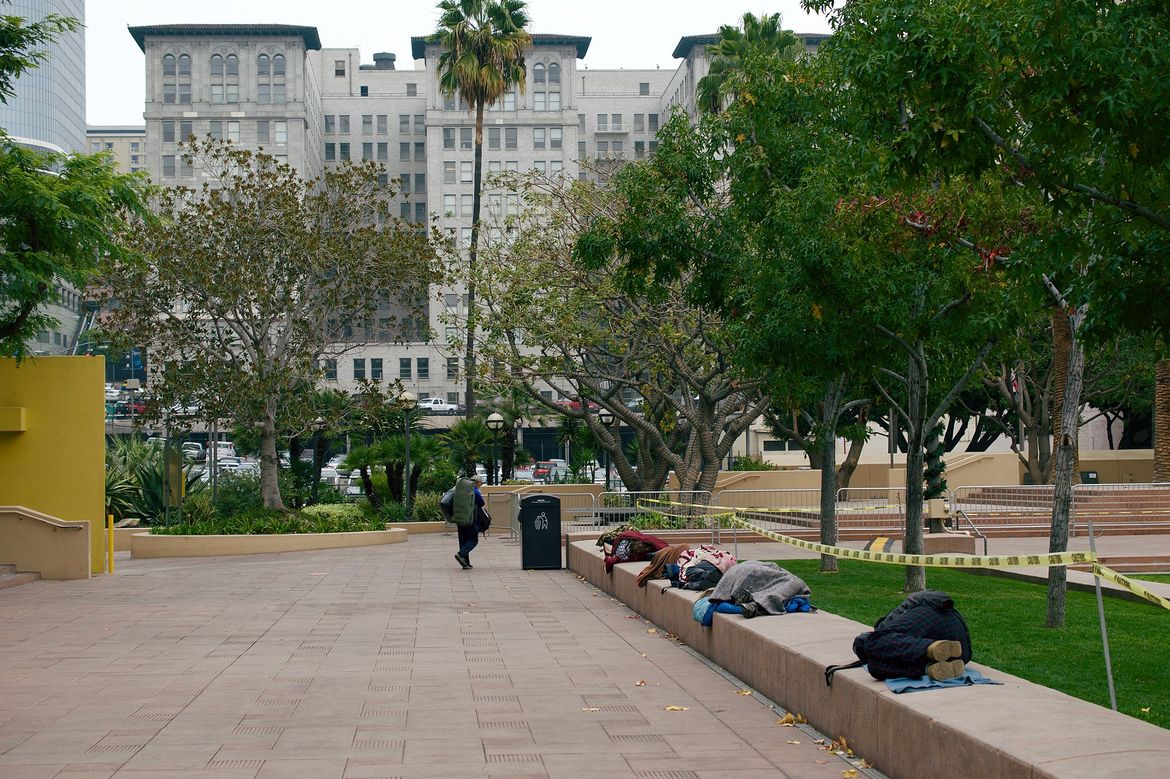
The homelessness crisis in California has been escalating for decades. This isn’t a random occurrence; it’s a complex issue stemming from a mix of economic, social, and political factors. Statistics show a significant increase, with the number of homeless individuals in California jumping by a staggering 42% between 2014 and 2022. Each night, over 160,000 people in the state are without a home. For more on the unfolding story of homelessness, check out losangeles1.one.
The Roots of Homelessness
A report from the UCLA Luskin Center for History and Policy delves into the history of homelessness in Los Angeles County, tracing its economic, racial, social, and political origins back to the Great Depression in the 1930s. During that era, thousands were forced to live on the streets, with Skid Row becoming a central hub for those experiencing homelessness. This population was largely comprised of single African American men. In response, the Los Angeles Bureau of Indigent Relief was established in 1933.
After World War II, Los Angeles saw a rapid population boom, which brought about severe housing challenges. This led to practices like “redlining” and restrictive zoning, fueling racial inequality and pushing more people onto the streets.
The 1950s marked a period when California began shutting down its mental health institutions, leaving low-income individuals with mental illnesses to end up on the streets or incarcerated.
Starting in the 1970s, business and real estate interests began to pressure city authorities to revitalize downtown by pushing out homeless individuals. This resulted in a reduction of available affordable housing and contributed to the recession of the early 1980s, further exacerbating the homelessness crisis. A notable example was the 1976 Skid Row plan, which aimed to move homeless services into a 50-block “containment zone” alongside selective police surveillance. This plan ultimately failed and was officially scrapped in 2016.
The 21st century has only seen the affordable housing crisis deepen, with the mortgage crisis and the Great Recession of 2008 adding further strain to the global economy.
Demographic Trends and Real Estate Policy
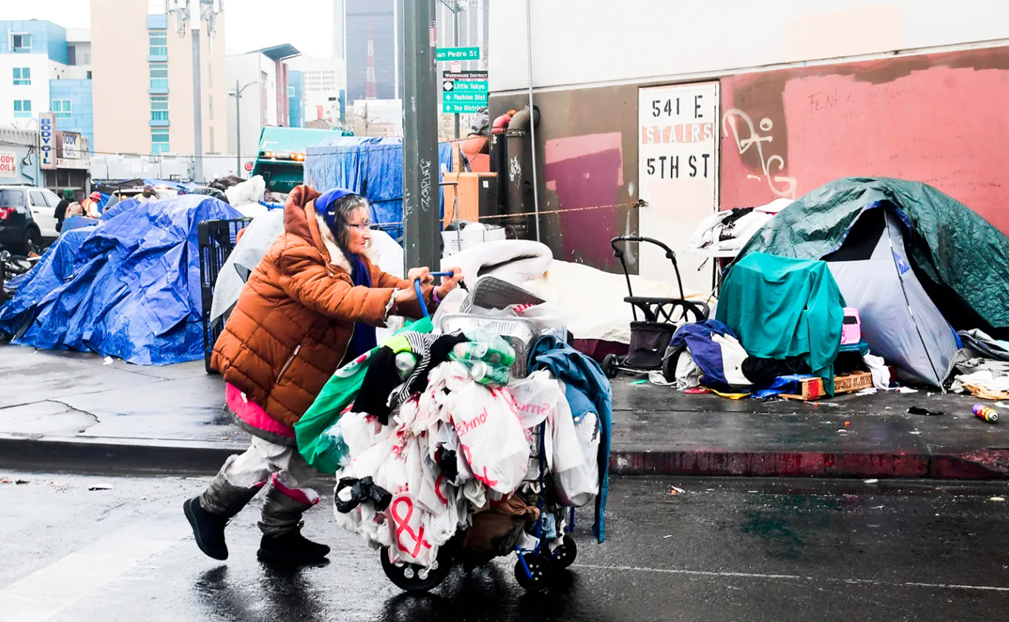
In the late 1990s, Los Angeles’ population surged again, but housing construction didn’t keep pace. Instead, some developers and businesses championed policies that favored building cheaper housing or implementing rent control. However, these proposals often failed to consider the direct needs and desires of those experiencing homelessness.
Kirsten Moore-Sheeley, co-author of the UCLA Luskin Center for History and Policy report, highlighted a crucial concept: rethinking housing as a fundamental human right. Their research revealed that throughout the 20th century, homeless individuals in Los Angeles were actively proposing solutions themselves, often focusing on repurposing vacant land and underutilized public property.
The Homelessness Crisis Explained
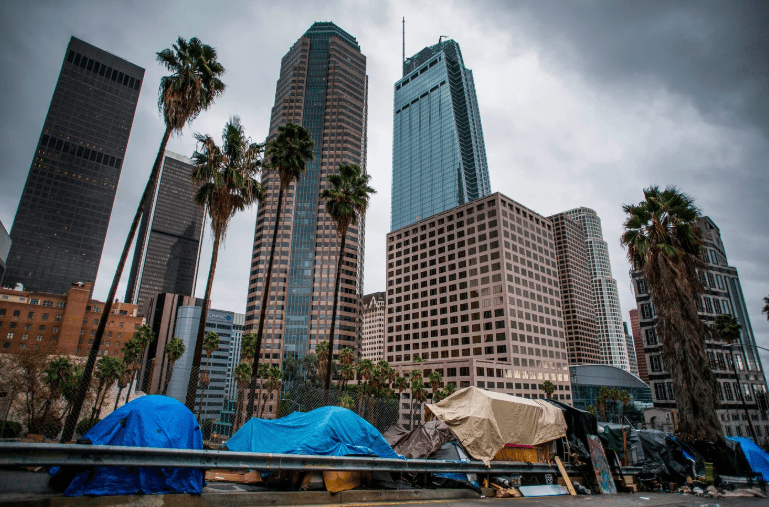
The homelessness crisis in California, including Los Angeles, is driven by several key factors:
- Exorbitant Housing Costs. California is infamous for having one of the nation’s most expensive housing markets. Between 2000 and 2021, the typical home value in the state more than tripled. In 2021, for instance, the average home in California cost roughly $775,000 – that’s double the price in New York and Florida, and triple that of Texas, according to the Zillow Home Value Index. This high cost, coupled with a scarcity of affordable options, creates an incredibly unstable situation, especially for low-income families and individuals.
- Restrictive Zoning and Local Opposition. Single-family zoning and community resistance to new housing developments have played a significant role. Growth control policies implemented by communities have been linked to an approximate 3-5% increase in housing prices. Moreover, development timelines are significantly extended due to environmental impact report requirements. In Los Angeles, the average approval time for these reports was 43 months, and a staggering 77 months in Santa Monica.
- Low Wages and Income Inequality. From 1990 to 2017, high-paying industries in California saw rapid growth: information technology (+127%), education and healthcare (+107%), and professional and business services (+84%). These figures are from a 2019 California report, highlighting a widening gap between high and low earners.
- Healthcare System Gaps. Preliminary data indicates that approximately 51% of homeless adults in Los Angeles County grapple with mental illnesses, and 46% struggle with substance use disorders. Studies conducted in 2013, 2015, and 2019 consistently confirm that drug addiction and mental health issues are persistent risk factors for homelessness.
- Lack of Shelter and Temporary Housing. Despite a sharp increase in the homeless population between 2007 and 2020, shelter capacity has remained stagnant. Furthermore, the number of beds in temporary housing facilities has consistently decreased. In 2020, only one-third of homeless individuals in California moved into permanent housing, while 47% were waiting for housing, and 16% weren’t utilizing the services offered. It’s crucial to note that the longer individuals remain homeless, the more their mental and physical health deteriorates, making it significantly harder for them to re-enter the workforce, find housing, and regain financial stability.
Is There Life After Homelessness?
In Los Angeles, the UCLA Homeless Healthcare Collaborative operates a mobile van, staffed by doctors, nurses, and mental health specialists, providing critical medical services to homeless individuals. In June 2023, Jose Morales decided to seek help there. He had lost his will to live, was lonely, homeless, and drank over 20 beers daily, living in a homeless encampment in South Los Angeles. He approached the mobile van because his legs were swollen. The doctor offered him a pair of compression socks and suggested he wear them. This simple act of kindness inspired him to act. He was tired of his situation. After seeking help, he received medication, clothing, and underwent a week of detox. Thanks to the medical professionals, he was admitted to a treatment center and completed a “12 Steps to Recovery” program. He moved to a rehabilitation center, bought a car, and found work as a driver for Lyft and an Amazon delivery driver.
Jose Morales feels like he’s taken his life back. He has reconnected with his mother and continues to share his journey at treatment centers throughout the city, where he once sought help himself.
This story proves that returning to a full life after homelessness is possible, but it requires the desire and strength to take that crucial first step.

Tackling Homelessness Head-On
Many city residents wonder if overcoming homelessness is even possible. The truth is, it is, but it demands persistence and a comprehensive strategy.
- Integrated Policy Approach. Policymakers must tackle the housing shortage and cost crisis alongside the mental health and addiction epidemics. For example, to boost housing construction, it’s essential to accelerate the approval of new projects, fund affordable housing programs, and permit residential development on commercial properties. Expanding exemptions and reforming laws to prevent baseless appeals are also crucial steps.
- Expanding and Improving Shelters. It’s vital to increase the number of shelters while also enhancing their quality and safety. Developing tiny home villages and modular projects, exploring co-living options, and reducing tax restrictions could also make a difference.
- Prioritizing Mental Health Treatment. Overcoming homelessness is impossible without addressing mental health. This requires increasing beds in psychiatric wards and reducing wait times for appointments. Laura’s Law, which allows for court-ordered assisted outpatient treatment for individuals who don’t recognize their illness, and LPS conservatorships for adults with severe mental illness and disabilities, are also important tools.
- Addressing Substance Addiction. Another key proposal in tackling homelessness involves providing comprehensive treatment for drug addiction among individuals living on the streets.
It’s impossible to say for certain when Los Angeles can fully conquer the problem of homelessness. It’s a long-term fight with ongoing challenges.